
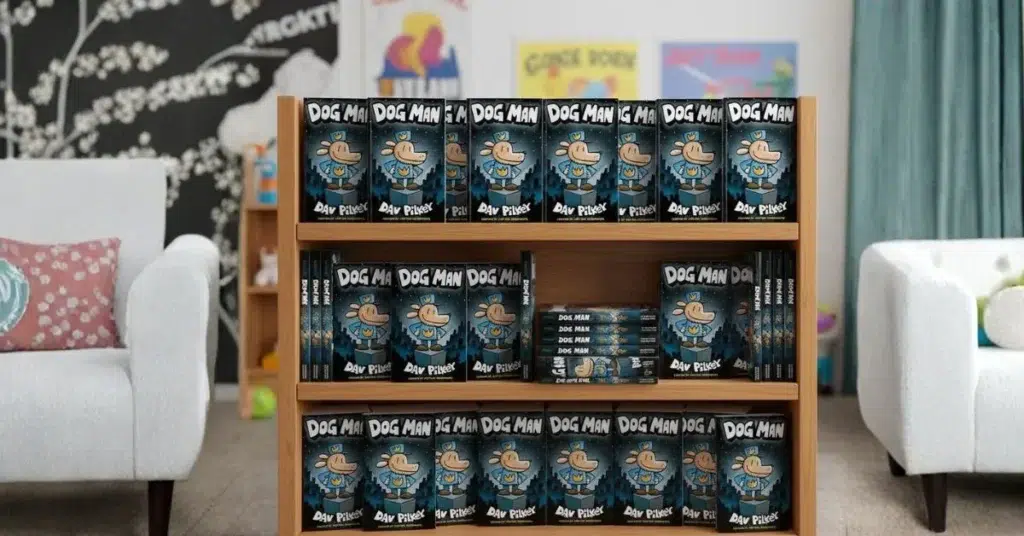
My son devoured all 14 Dog Man books in about three weeks. He’d finish one at dinner, grab the next one, and disappear into his room. For a kid who told me he “didn’t like reading,” this was real progress.
Then he finished the last one and looked at me like I’d personally failed him. “What do I read now?”
If you’re here, your kid probably did the same thing. Dog Man has sold over 60 million copies because Dav Pilkey figured out what reluctant readers actually want: funny characters, fast plots, and pages that don’t feel like homework. The trick is finding what comes next without losing that momentum. These are the graphic novels that worked in our house. I’ve organized them by how close they feel to Dog Man, starting with the obvious and working toward the slightly more ambitious.
More Dav Pilkey
Start with what your kid already knows. Pilkey’s other series have the same humor, the same flip-o-rama pages, and the same joyful chaos that makes Dog Man work. If your kid refuses to try anything by a different author yet, these buy you time.
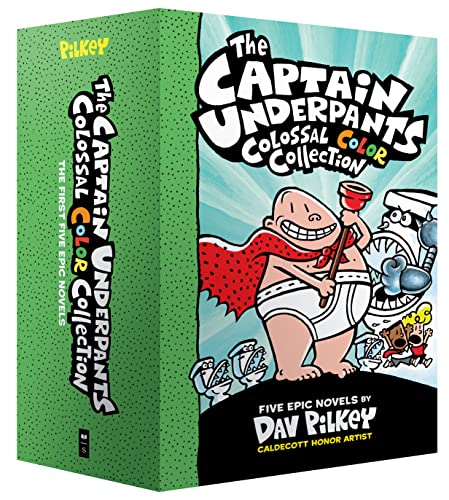
Captain Underpants: The Full Color Collection
Captain Underpants came first. Pilkey started this series in 1997, and it’s the reason Dog Man exists. Two kids, George and Harold, hypnotize their principal into thinking he’s a superhero in underwear. It’s exactly as ridiculous as it sounds.
The color editions are the ones to get. The original black-and-white versions feel dated compared to Dog Man’s full-color pages. The box set collects the first five books, which is enough to know if your kid is in. My son thought Captain Underpants was funnier than Dog Man, which felt like betrayal.
Cat Kid Comic Club
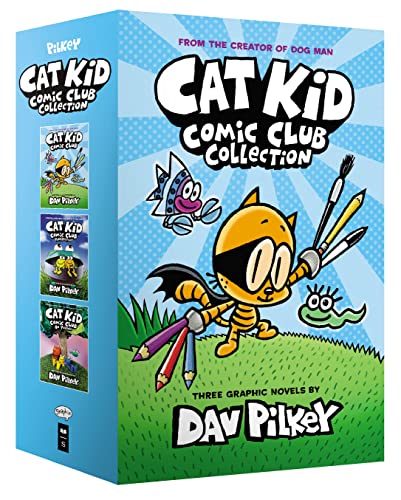
Cat Kid Comic Club is Pilkey’s spinoff set in the Dog Man universe. Li’l Petey and Molly teach twenty-one baby frogs how to make comics. It’s a comic about making comics. Weird concept, but it works.
What makes this one different is that it sneaks in actual creative lessons. The frogs learn about storytelling, dealing with failure, and finding their own style. Your kid won’t notice they’re absorbing anything. That’s the point. Five books so far, and Pilkey is still going.
Same Energy (Silly + Slapstick)
These series have the same chaotic energy as Dog Man. Animal characters doing ridiculous things, visual gags on every page, and plots that move fast. If your kid liked Dog Man because it was funny and weird, start here.
InvestiGators
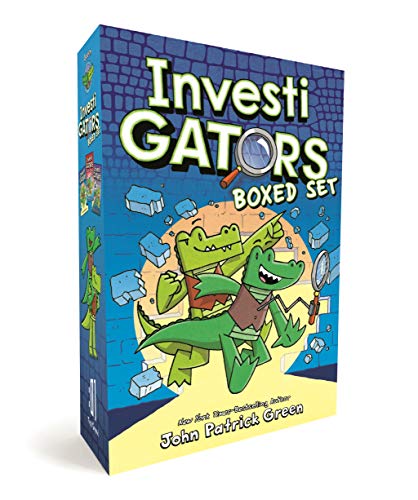
Two alligators work as investigators. They’re not good at their jobs. The books are packed with terrible puns, sight gags, and absurd villains. John Patrick Green keeps the same energy Pilkey has, with slightly more plot holding things together.
There are seven books in the series, and a box set for the first four. My son burned through these right after Dog Man. The humor lands in the same zone: silly enough for a 7-year-old, self-aware enough that older kids don’t feel like they’re reading baby books.
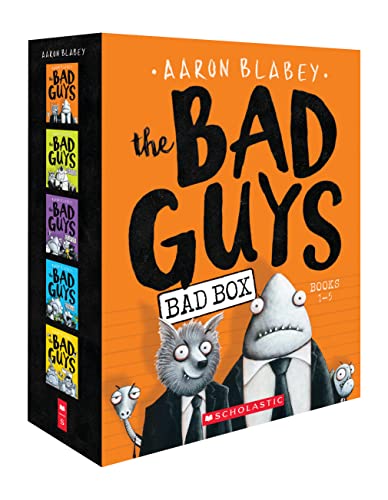
The Bad Guys
A wolf, a snake, a piranha, and a shark decide to stop being villains and start being heroes. The books are quick reads, about 140 pages each, and the DreamWorks movie adaptation was solid.
Aaron Blabey’s art style is different from Pilkey’s. More cinematic, less comic-strip. Some kids prefer it. The series runs 16 books, and the story actually develops as it goes. Characters grow. Stakes increase. It’s not just the same joke repeated.
The box set is the way to start. If your kid saw the movie and liked it, the books are better.
More Story, Still Fun
At some point, your kid might be ready for graphic novels with actual plot arcs. These still have humor and fast pacing, but the stories go deeper. Characters face real problems. There are consequences. Think of this as the step from “funny animal chaos” to “funny chaos with feelings.”
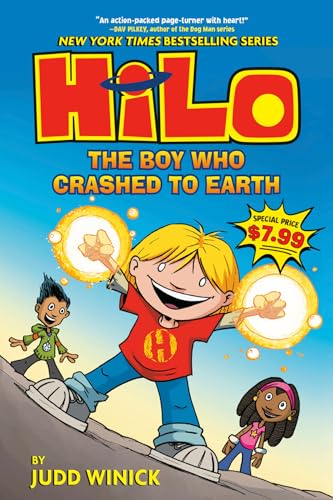
Hilo: The Boy Who Crashed to Earth
A robot boy crashes to Earth and befriends two kids. Sci-fi action, weird humor, and surprisingly emotional moments. Judd Winick has been writing comics for decades, and he knows how to balance funny with genuine heart.
The series is 11 books and complete. It starts simple and gets more complex as it goes, which is exactly what you want for a kid leveling up from Dog Man. My daughter read these when she was about 10, and they were one of the series that moved her from graphic novels into longer books.
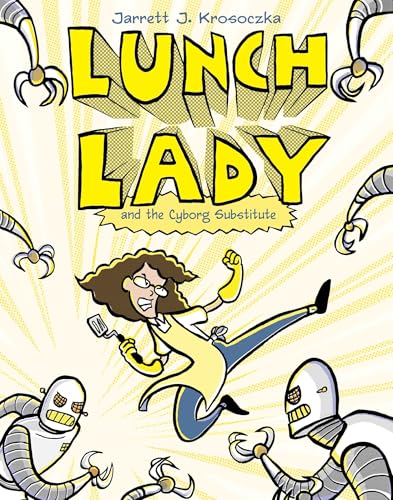
Lunch Lady and the Cyborg Substitute
The school lunch lady is secretly a crime-fighting spy with gadgets hidden in kitchen equipment. A spork that doubles as a weapon. A hairnet that intercepts radio signals. The premise is absurd, and Jarrett Krosoczka makes it work.
Each book is a self-contained case, so your kid doesn’t need to read them in order. Ten books total. They’re shorter than Dog Man, which makes them good for kids who want to finish something in one sitting and feel accomplished.
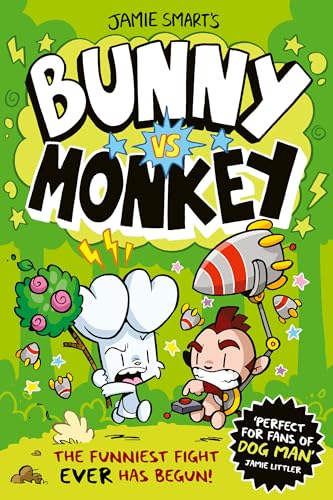
Bunny vs Monkey
Jamie Smart’s series is pure chaos. A monkey crashes into a forest and tries to take over, while a bunny and friends try to stop him. It’s British humor, which means it’s drier and weirder than most American graphic novels for kids.
This one is less well-known, and that’s a shame. The art is energetic, the stories are unpredictable, and there’s a weirdness to it that kids who’ve outgrown straightforward silly humor respond to. Five books in the main series.
Ready for Something Bigger
These graphic novels bridge the gap between Dog Man and chapter books. They have complex plots, detailed artwork, and stories that span multiple volumes. If your kid is ready to invest in a longer series with higher stakes, point them here.
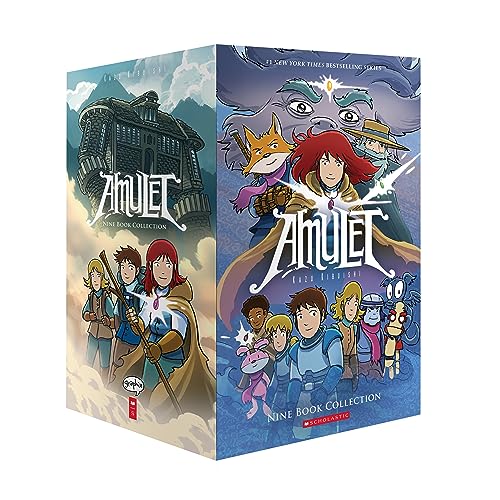
Amulet
After their father dies in a car accident, Emily and Navin follow their mother through a door into a fantasy world. Emily finds an amulet that gives her power, but the amulet has its own agenda. The story is darker than anything else on this list.
Kazu Kibuishi spent years on each volume, and it shows. The world-building is massive. Characters die. Choices have consequences. My daughter read Amulet at 11, and it was one of the first series where she couldn’t stop talking about the story, not just the jokes.
Nine books, complete series. The box set is the best value. This is the graphic novel I recommend most to parents who say their kid “only reads Dog Man.” Give them a year with the silly stuff, then hand them Amulet.
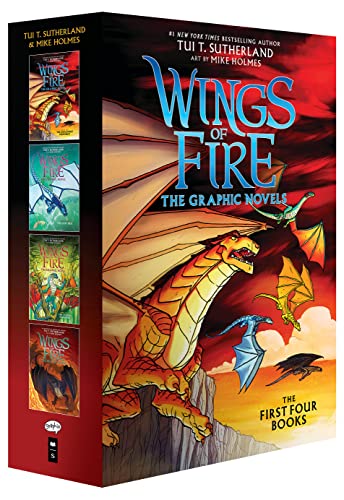
Wings of Fire: The Graphic Novels
If your kid already reads the Wings of Fire chapter books, the graphic novels are an easy sell. They adapt Tui T. Sutherland’s bestselling dragon fantasy series into full-color graphic novels with art by Mike Holmes.
The graphic novels cover the first five books of the series. Dragons, war, prophecy, and questions about destiny and choice. The story is more complex than Dog Man by a wide margin, but the visual format keeps reluctant readers engaged.
These work two ways. For kids who read the chapter books, the graphic novels add the visual element. For kids who haven’t, the graphic novels are a gateway into a 15-book series. Either way, you win.
What’s Next
If your kid is getting into graphic novels and you want to explore more visual storytelling, check out our Dad’s Guide to Anime for shows to watch together. Dragon Ball, Demon Slayer, and My Hero Academia all started as manga (Japanese graphic novels), and reading them builds on the same skills your kid is developing with Dog Man and Amulet. Not sure which anime fits? The Anime Finder gives age-based picks in seconds.
For younger kids who aren’t ready for graphic novels yet, our age guides for 3-year-olds and 5-year-olds have picture book recommendations that build a reading habit early.
Browse all our guides on the Graphic Novels hub page.

About These Recommendations
I’m George. I read to my kids for 10+ years before they started reading on their own. My wife’s a therapist who helped pick books that actually matter for development. Everything on this site got tested on our family first.
FAQ
Dog Man is written for ages 7 to 12, though kids as young as 5 enjoy the pictures and humor. The content is consistently kid-friendly with cartoon violence and potty humor. Dav Pilkey created Dog Man and Captain Underpants specifically for kids who struggle with traditional books, so the reading level is intentionally accessible.
Yes. Research consistently shows that graphic novels build the same literacy skills as traditional books. Kids reading graphic novels practice vocabulary, narrative comprehension, sequencing, and inferencing. They also develop visual literacy, which is its own skill. The American Library Association and school librarians widely recommend graphic novels as legitimate reading material. If your kid is reading graphic novels instead of nothing, that is a win.
There are 14 Dog Man books as of 2026. The series started with Dog Man in 2016, and Dav Pilkey has been releasing roughly one book per year. Pilkey has not announced an end to the series, so more books are expected.
Read Dog Man books in publication order, starting with Dog Man (2016). Each book builds on the previous story with recurring characters and plot threads. The characters and relationships develop across the series, so jumping in at a random book will be confusing. Start at book one and let your kid work through them. Most kids finish all 14 in a few weeks anyway.
For kids ready to move beyond Dog Man, Amulet by Kazu Kibuishi and Wings of Fire graphic novels offer more complex stories with the same visual format. Hilo by Judd Winick bridges the gap with its mix of humor and deeper storytelling. These series maintain the appeal of graphic novels while introducing longer plot arcs and more developed characters.
Yes. The Bad Guys series by Aaron Blabey is widely available in school libraries and is considered appropriate for elementary school readers. The humor is clean, the themes focus on redemption and doing the right thing, and there is no content that typically triggers school concerns. Many teachers use them in reluctant reader programs.
Let them. A kid who reads graphic novels every day is building reading skills. Vocabulary, comprehension, narrative structure: it is all there. Many kids who start with graphic novels eventually pick up chapter books on their own when they find a story that hooks them. But even if your kid stays with graphic novels, they are still reading. That counts.