
I’ve been in tech for over 15 years and marketing has always been part of the job, whether I wanted it to be or not. Product launches, growth experiments, positioning. You don’t need to be a marketer to benefit from understanding how marketing works.
The 15 books below span classic advertising, consumer psychology, persuasion, and modern growth strategy. Some were written decades ago and remain relevant. Others are recent but already feel essential. I’ve organized them by what they teach rather than alphabetically, so you can jump to what’s most useful for where you are right now.
Psychology and Persuasion
Understanding why people make decisions is the foundation of everything in marketing. These books dig into the psychology behind buying, sharing, and saying yes.
Influence: The Psychology of Persuasion by Robert Cialdini
Cialdini identifies six principles of persuasion: reciprocity, commitment, social proof, authority, liking, and scarcity. Once you learn them, you start seeing them everywhere, in ads, in negotiations, in how your kids convince you to let them stay up late.
This isn’t just a marketing book. It’s a manual for understanding human behavior. Useful whether you’re designing a landing page or trying to get buy-in for a project at work.
Contagious: Why Things Catch On by Jonah Berger
Berger is a marketing professor at Wharton and this book distills his research into why some products and ideas go viral while others don’t. He identifies six drivers: social currency, triggers, emotion, public visibility, practical value, and stories.
The framework is actionable. After reading it, I started noticing why certain posts get shared and others don’t. It also made me more aware of my own behavior online, which was a bonus I didn’t expect.

Predictably Irrational by Dan Ariely
Ariely is a behavioral economist who makes academic research genuinely entertaining. The book explores the irrational tendencies and psychological traps that drive our decisions, from how we value “free” things to why we procrastinate on tasks we know matter.
Parts of the book are more academic than the others on this list, but it’s worth the effort. Once you understand how predictably irrational people are, you make better decisions yourself and better products for others.
Hooked: How to Build Habit-Forming Products by Nir Eyal
Eyal provides a four-step framework (trigger, action, variable reward, investment) for building products that people come back to repeatedly. It’s the science behind why you check your phone 80 times a day.
Useful for product builders and marketers who want to understand engagement at a deeper level. The framework is simple enough to apply immediately, which is rare for business books.
Classic Advertising
These books were written before digital marketing existed, but the principles of great copywriting, persuasive advertising, and understanding your customer haven’t changed. If anything, they matter more now because most online marketing is so formulaic.
Ogilvy on Advertising by David Ogilvy
Ogilvy wrote this in 1985 and the core ideas about emotion, narrative, and respecting your audience still apply. The book covers print, direct mail, and broadcast advertising, along with Ogilvy’s copywriting principles.
Some of the specific media advice is dated, but the thinking behind it is timeless. Ogilvy believed in research, testing, and measuring results, which sounds obvious now but was radical when most advertising was purely creative guesswork.
Scientific Advertising by Claude Hopkins
Hopkins wrote the foundation for direct-response advertising. The book is short, dense, and entirely focused on what works and what doesn’t, based on measured results rather than creative opinion.
Written in 1923, it reads like something from a different era because it is. But the core principle, that advertising should be measurable and accountable, is the basis for every performance marketing team today.
The Boron Letters by Gary C. Halbert
Halbert was one of the best direct-mail copywriters in history. In 1984, while serving time in Boron federal prison for tax fraud, he wrote these letters to his son Bond, teaching him about copywriting, business, and life.
The format gives the book an unusual intimacy. It’s a father teaching his son how the world works, with direct-mail marketing as the lens. The copywriting advice is specific and applicable to any form of persuasive writing.
Writing That Works by Kenneth Roman and Joel Raphaelson
Clear writing is the most underrated marketing skill. Roman and Raphaelson cover business communication: emails, memos, presentations, reports. The advice is practical and immediately useful.
Not a marketing book in the traditional sense, but good marketing starts with good writing. This book teaches you to communicate clearly and concisely, which improves everything from ad copy to internal proposals.
Growth and Strategy
These books cover the strategic side of marketing: how to position products, build trust with customers, cross the gap from early adopters to mainstream, and use power dynamics in business.
The 22 Immutable Laws of Marketing by Al Ries and Jack Trout
Ries and Trout distill marketing strategy into 22 laws. Some are debatable, but the framework forces you to think clearly about positioning, competition, and market dynamics. It’s a quick read and a good reset if you’ve gotten lost in tactical details.
The “Law of the Category” alone is worth the read: if you can’t be first in a category, create a new category where you can be first.
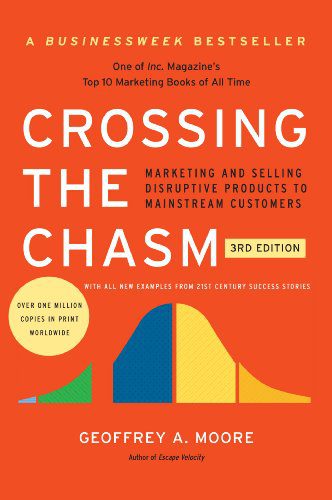
Crossing the Chasm by Geoffrey A. Moore
Moore explains why so many tech products fail after finding initial traction. The “chasm” is the gap between early adopters (who love new things) and the early majority (who need proof it works). Different strategies are needed for each group.
Essential reading if you work in tech marketing or product management. The framework has been validated by decades of real-world examples and remains the standard reference for go-to-market strategy in technology.
Permission Marketing by Seth Godin
If you know Seth Godin, you know this book. Permission Marketing argues that interrupting people with ads is less effective than earning their attention over time. Build trust first, sell later.
Godin wrote this in 1999 and it predicted the entire shift toward content marketing, email newsletters, and building audiences before selling. The case studies are dated but the principles are more relevant than ever.
How to Win Friends and Influence People by Dale Carnegie
Carnegie’s 1936 classic appears on marketing lists because the fundamentals of persuasion haven’t changed. Listen, show genuine interest, make people feel important. These principles work in sales, negotiations, partnerships, and customer relationships.
The title sounds manipulative but the content is the opposite. It’s about building genuine connections. Still one of the most practical books on human relationships ever written.
The 48 Laws of Power by Robert Greene
Greene draws on Sun Tzu, Machiavelli, and historical figures to outline 48 principles of power and influence. It’s more about strategy and human dynamics than marketing specifically, but understanding power dynamics is essential for anyone in business.
The book is controversial by design. Not every “law” is something you’d want to follow. But reading it gives you a framework for understanding how influence operates in organizations and markets.
Business Stories
Sometimes the best marketing lessons come from reading how companies were actually built. These two books tell real stories that teach more about marketing than most textbooks.
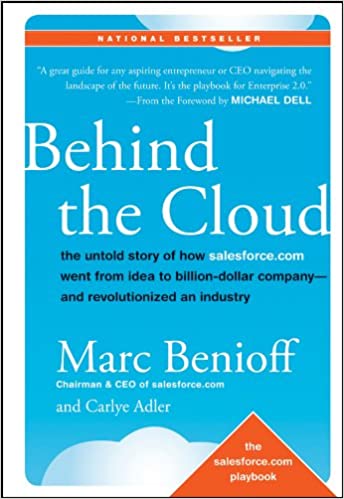
Behind the Cloud by Marc Benioff
Benioff tells the story of how Salesforce went from idea to billion-dollar company. The book covers his decision-making process, marketing strategies, and how he used technology and philanthropy to differentiate Salesforce in a crowded market.
The writing is straightforward. Not the most exciting prose, but the strategic insights are valuable, especially around innovative marketing tactics that Benioff used to break into enterprise software.
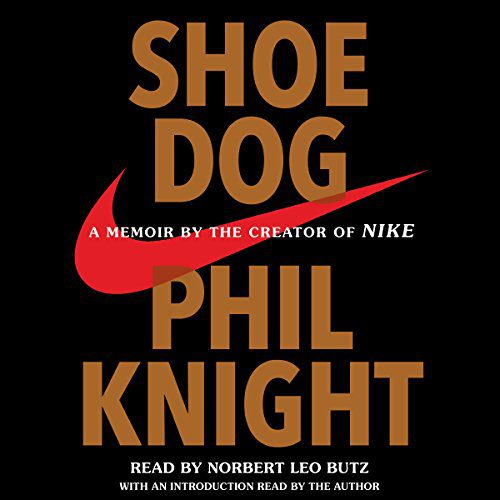
Shoe Dog by Phil Knight
Knight tells the Nike origin story with remarkable honesty. The constant battles, the financial stress, the creative risks that defined the brand. It’s a memoir, not a business guide, but you learn more about building a brand from Knight’s story than from most marketing textbooks.
Knight writes well about the importance of surrounding yourself with creative people and trusting unconventional ideas. One of the best business memoirs out there.
What’s Next

About These Recommendations
I’m George. I read to my kids for 10+ years before they started reading on their own. My wife’s a therapist who helped pick books that actually matter for development. Everything on this site got tested on our family first.