
Some links on this page are affiliate links. As an Amazon Associate and a Bookshop.org affiliate, I earn from qualifying purchases, at no extra cost to you. Read our affiliate disclosure.
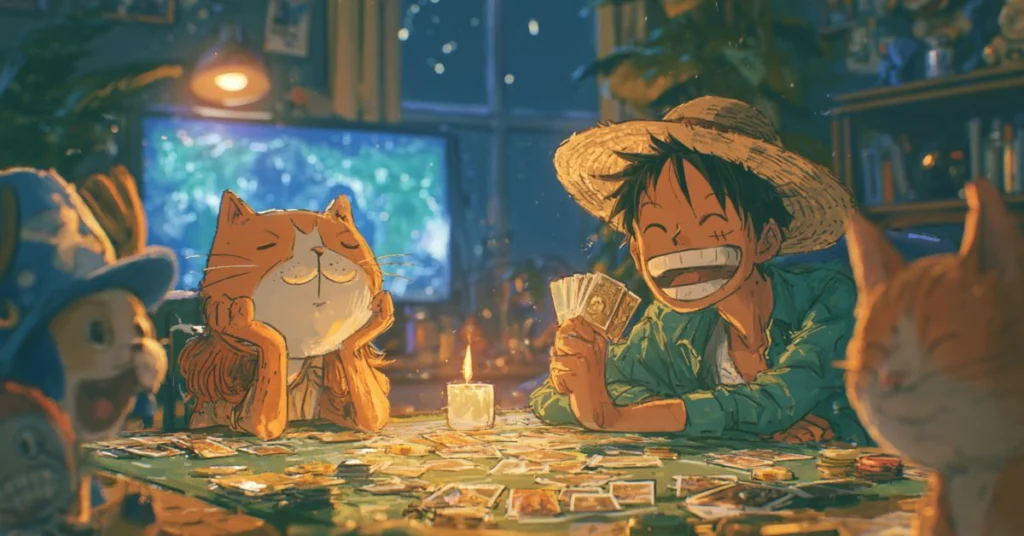
My son read the One Piece manga first. This summer he started the anime, and about three months ago he moved on to the One Piece card game. I play it with him at home. We now own four of the six current starter decks, the Learn Together set, a few booster packs and a stack of sleeves, and I’ve learned which parts are worth the money.
If your kid is asking for One Piece cards, here’s how to get started without overpaying: which deck to buy first, what’s actually in the box, and the one buying mistake that’s easy to make right now.
The Short Answer
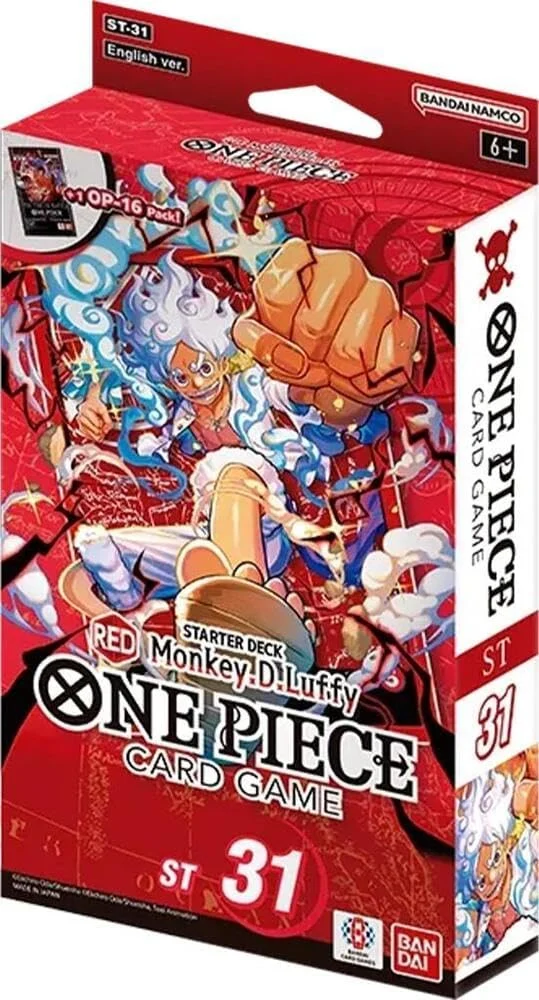
Buy two starter decks, one for each player, and let your kid pick the Leader they like. Each deck is ready to play out of the box. The current wave (July 2026) has six decks: Luffy, Zoro, Kuzan, Katakuri, Sabo and Kid. They all retail for $11.99 and come with the same contents, so there’s no wrong first pick. For a Luffy fan, start with the red Luffy deck.
Below, I’ve listed all six decks with where each character first shows up in the manga and the anime, so your kid can pick the one that matches the story they know.
One warning before you click anything: on Amazon, these decks are selling well above the $11.99 sticker price right now. More on that in Where to Buy.
The Six Starter Decks, and Where Each Character Comes From
We started with the Learn Together Deck Set, and it was a good way to learn. It comes with three decks, a two-player playsheet and guide books that walk you through your first games. It retails for $39.99, but it’s hard to find at that price at the moment, so I wouldn’t pay a big markup for it. Two starter decks get you playing for less.
After that, we added four of the six July 2026 decks: Luffy, Zoro, Kuzan and Sabo. Kids pick a deck for the character on the box, so here’s where each Leader first shows up in the manga and the anime, and the arc where their story really happens.
| Deck | Leader | First in the manga | First in the anime | Their big arc |
|---|---|---|---|---|
| ST-31 Red | Monkey D. Luffy | Vol. 1, ch. 1 | Episode 1 | East Blue (vols 1 to 12, episodes 1 to 61) |
| ST-32 Green | Roronoa Zoro | Vol. 1, ch. 3 | Episode 1 | Baratie, his duel with Mihawk (vols 5 to 8, episodes 19 to 30) |
| ST-33 Blue | Kuzan (Aokiji) | Vol. 34, ch. 318 | Episode 226 | Marineford (vols 56 to 59, episodes 457 to 489) |
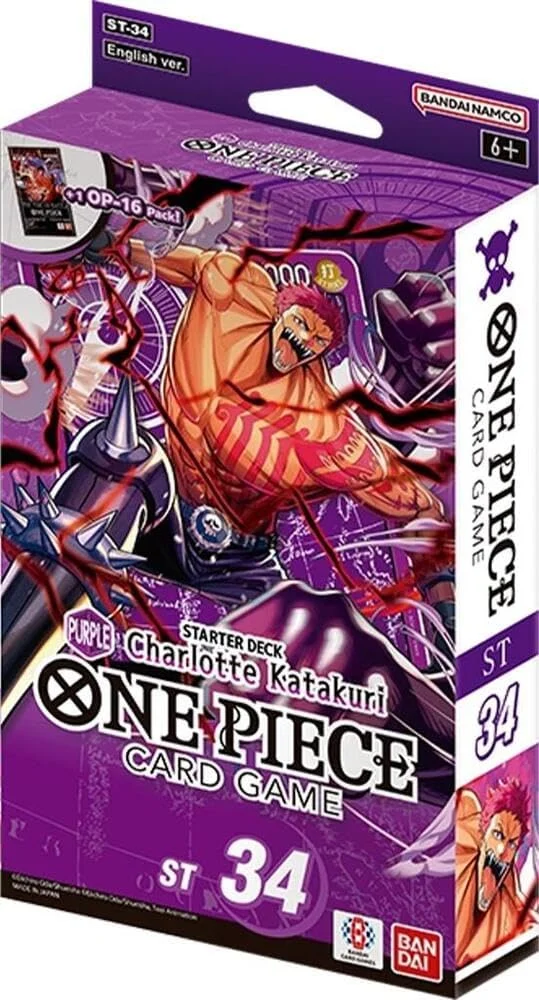
| ST-34 Purple | Charlotte Katakuri | Vol. 86, ch. 860 | Episode 825 | Whole Cake Island (vols 82 to 90, episodes 783 to 877) |
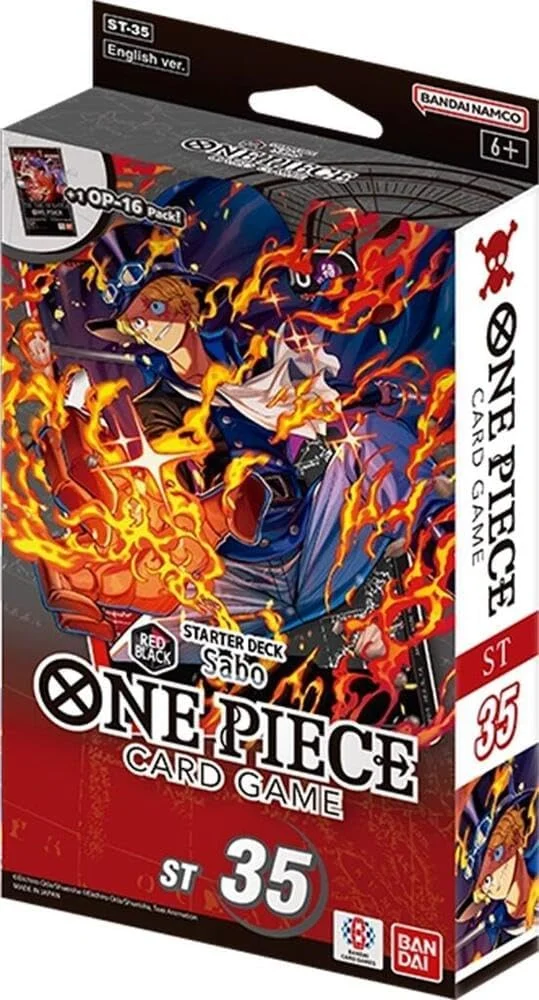
| ST-35 Red/Black | Sabo | Vol. 59, ch. 583 | Episode 494 | Dressrosa (vols 70 to 80, episodes 629 to 746) |
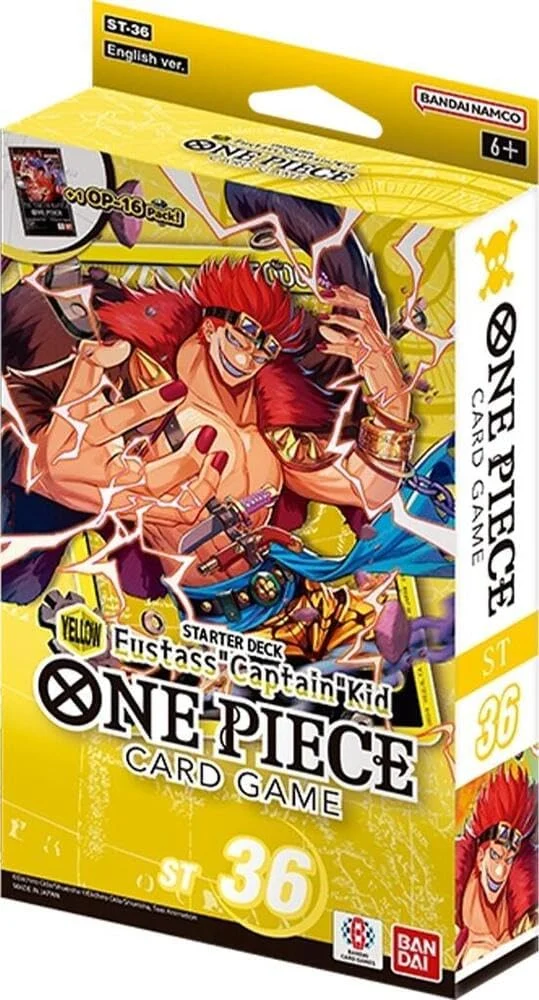
| ST-36 Yellow | Eustass Kid | Vol. 51, ch. 498 | Episode 392 | Sabaody Archipelago (vols 50 to 53, episodes 385 to 405) |
Each deck has a different color, and the color decides how the deck plays. The red Luffy deck, one of ours, is the card in The Short Answer above. Luffy is on the first page of the manga and in the first episode, and the whole East Blue saga is in manga Box Set 1.
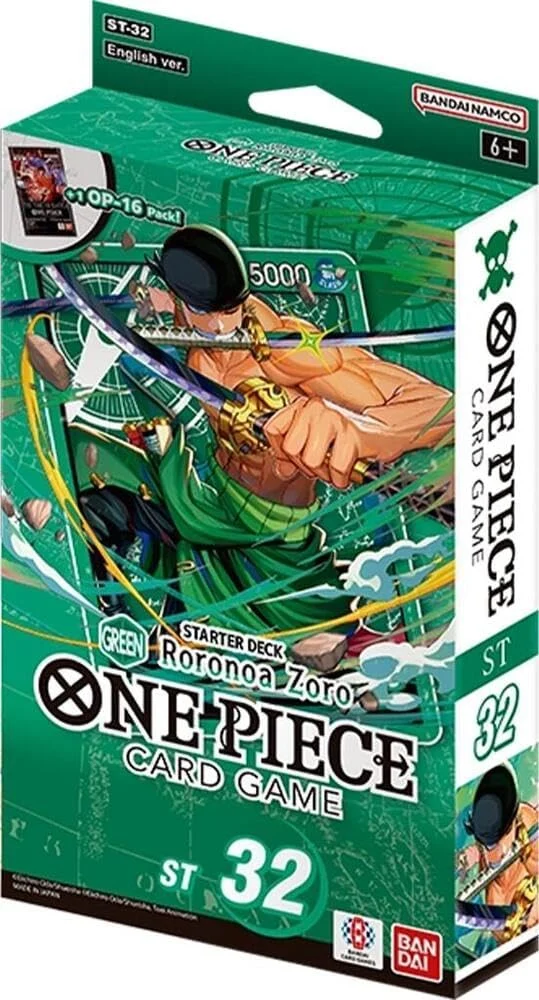
Green Zoro (ST-32), one of ours. Zoro joins Luffy in volume 1, so he’s there from the start. His big early moment is the sword duel with Mihawk at the Baratie, also in Box Set 1. Luffy and Zoro are a natural pair for two Straw Hat fans starting together.
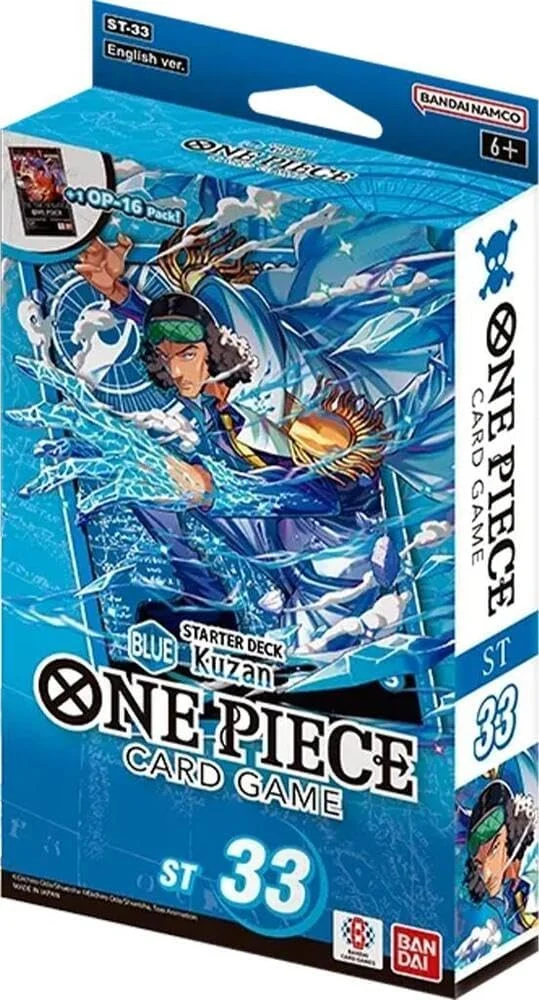
Blue Kuzan (ST-33), one of ours. Kuzan, the admiral also called Aokiji, steps in for real in volume 34, and he’s a big part of the Marineford war in volumes 56 to 59. That’s one of the darkest stretches of the series, so check our One Piece age rating before a younger kid gets there. His first scenes are in Box Set 2, and Marineford is in Box Set 3.
Purple Katakuri (ST-34). One of Big Mom’s sons, and Luffy’s toughest fight of the Whole Cake Island arc. He doesn’t show up until volume 86 and episode 825, so a kid who just started the show won’t know him yet. That arc is in Box Set 4.
Red/Black Sabo (ST-35), one of ours. Luffy’s brother. Kids first meet him in a childhood flashback in volume 59 (episode 494), and his big arc is Dressrosa, volumes 70 to 80. The flashback is in Box Set 3, and most of Dressrosa is in Box Set 4.
Yellow Kid (ST-36). Eustass Kid, a rival pirate captain who shows up with the other Supernovas at Sabaody in volume 51 (episode 392). That arc is in Box Set 3. At the end of October 2026, it was the cheapest of the six on Amazon.
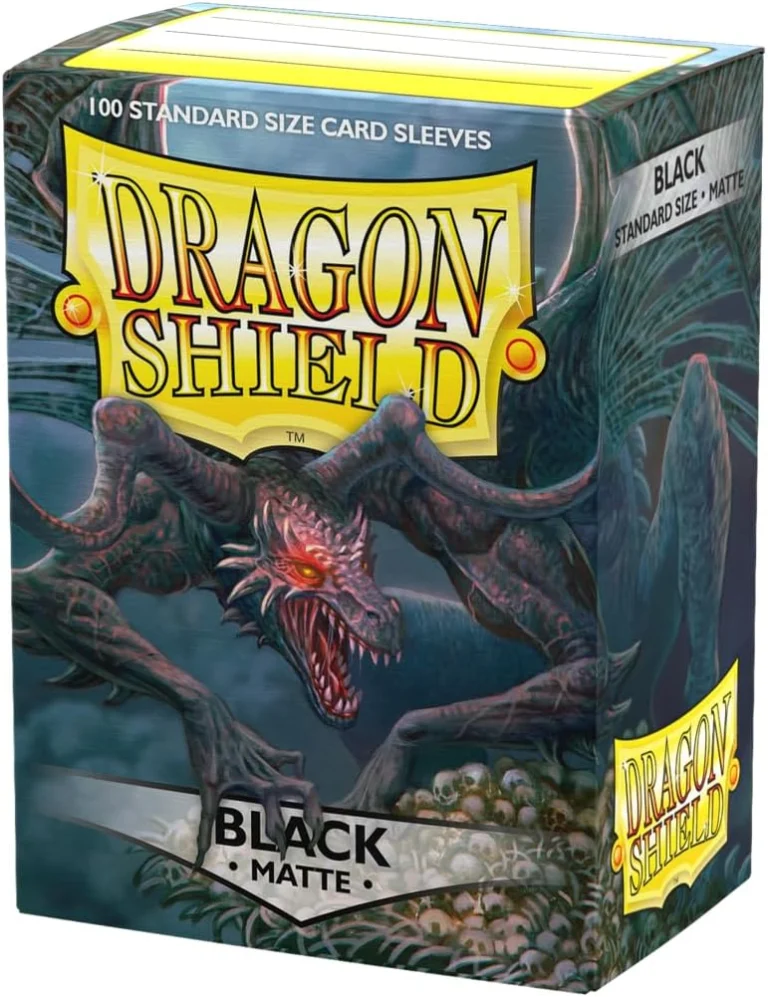
Card Sleeves for One Piece Cards
We sleeve our decks.
Kids shuffle hard. Sleeves keep the cards from bending or getting marked, and One Piece cards are standard size, the same as Pokemon and Magic cards, so any standard 100-pack covers a deck with spares. These Dragon Shield sleeves are sold near their usual price on Amazon.
What’s in a Starter Deck
Each deck in this wave comes with a Leader card and a 50-card deck, 10 DON!! cards, a playsheet and one OP-16 booster pack. That’s everything one player needs. The DON!! cards are the game’s energy. You add them each turn and spend them to play cards and power up attacks.
Each player needs their own deck. That’s the part parents miss. One starter deck is one player, so for a parent and a kid, or two siblings, buy two. Your Leader sets how many Life cards you start with, and you win when your opponent is out of Life and takes one more hit.
Where to Buy (and What to Avoid)
At the end of October 2026, no English starter deck was sold by Amazon itself. Every listing I found was a third-party seller. Kid, Kuzan and Sabo were going for nearly double the $11.99 price, Katakuri for more than double, and Luffy and Zoro for about three times that. Older decks are worse. The original Straw Hat Crew deck from 2022 was listed at more than five times its retail price.
So check a local game store or a big-box toy aisle first. Starter decks there usually sell at or near the $11.99 retail price when they’re in stock, and some game stores run beginner events.
Watch out for Japanese decks. Some cheap “set of 2” listings on Amazon are Japanese-language imports. The cards are real, but your kid won’t be able to read the effects, and official English events only allow English cards. Look for “English” in the listing title before you buy.
What Age Is the One Piece Card Game For?
Bandai doesn’t print an age on its own product pages. The Amazon listings for the current starter decks say 6 and up. In practice the limit is reading. Every card has effect text, and a game is a chain of small decisions, so a kid who reads comfortably will pick it up much faster.
The cards themselves are tame: character art, numbers and effects. The bigger question is the show behind them. We rate the One Piece anime 12+, and our One Piece age rating guide explains why.
Booster Packs: Fun, With a Limit
Booster packs are random cards from a set, and they retail for $4.99 each. Opening them is the fun part, and it’s also where the money goes. You don’t need boosters to play. A starter deck is a complete game. My advice: let them open a few, and set a limit before you walk into the store.
What’s Next
Is the show OK for your kid? Read the One Piece age rating guide.
Reading the manga? Our One Piece manga reading order lists every arc and box set.
Comparing One Piece with Naruto and Bleach? The Big Three parent guide covers all three.
More gift ideas are in our anime gifts for kids guide, and everything else lives on the Anime & Manga hub.

About These Recommendations
I’m George, a dad of two. My wife did most of the reading to our kids when they were little, and I did my share. She’s a therapist, and she helps pick the books that actually matter for their development. Some of what’s on this site we’ve read, watched or played as a family. Some I tried on my own first. The rest comes from research: reviews, episode guides, other parents online, and whatever the kids bring home from school.
FAQ
Amazon listings for the current English starter decks say 6 and up, and Bandai doesn’t print an age on its product pages. Reading is the real limit, since every card has effect text. A kid who reads comfortably and has someone to play with will pick it up fastest.
Any deck from the current wave works, so let your kid pick the Leader they like. All six July 2026 starter decks retail for $11.99 and come ready to play. For a Luffy fan, start with ST-31, the red Luffy deck.
Yes. Each player needs their own deck, so a parent and a kid, or two siblings, need two starter decks. The Learn Together Deck Set includes three decks in one box.
Standard English starter decks retail for $11.99. In mid-November 2026, Amazon listings were well above that, so a local game store is usually the better place to buy.
It’s a good way to learn: three decks, a two-player playsheet and guide books for your first games. It retails for $39.99. If you can’t find it near that price, two starter decks are the cheaper way in.
Not for official play: English events only allow English cards. At home, a kid learning the game needs to read the card effects, so stick to English. Look for “English” in the listing title before you buy.