
Some links on this page are affiliate links. As an Amazon Associate and a Bookshop.org affiliate, I earn from qualifying purchases, at no extra cost to you. Read our affiliate disclosure.
The final Bleach season is airing weekly as I write this. The last two episodes are scheduled for October 19 and October 26, 2026, and when it wraps, a story that started back in 2004 is finally finished.
Which means Bleach is getting talked about at school again. That is how shows enter our house. Somebody mentions it at lunch, and the tile is already sitting there on a service we pay for.
Bleach is not hypothetical for us. My daughter finished the Soul Society arc and immediately wanted more. The new series is the open question in our house, because Thousand-Year Blood War is rated TV-MA, and at 13 my daughter is right on the line of our own 14+ call.
I went looking for one answer that covers both the 2004 series and the new one, because they are close to being different shows. I could not find it.
The Short Answer
We rate Bleach 14+. That one number covers the original series and Thousand-Year Blood War together, and you can see it alongside every other show we have rated in our Anime Finder, which is where all our age ratings live.
The 14 comes from the new series, not from the 366 episodes your kid’s older cousins grew up on.
Thousand-Year Blood War is TV-MA in the US, and it earns the label: sword combat with blood, horror creature designs, and character deaths that stick. Those are the exact content warnings on our Finder entry for Bleach, and every one of them gets heavier in the final arc than anywhere in the original run.
Meanwhile the 2004 series has carried TV-14 labels (sometimes TV-PG) for two decades, and plenty of parents remember it as a late-night Adult Swim staple that never felt extreme. Both impressions are accurate. That gap is why the show needs splitting in two before any age-by-age advice.
One Show, Two Eras
Bleach is really two shows wearing one name, made almost twenty years apart, and the ratings bodies treat them that way. Look the show up and this is what comes back.
| Where you look | What it says |
|---|---|
| Original series on US platforms | TV-14 (some listings TV-PG) |
| Thousand-Year Blood War on Hulu (US) | TV-MA |
| Thousand-Year Blood War in Japan | R17+ equivalent, midnight broadcast slot |
| United Kingdom (Thousand-Year Blood War) | 15 |
| Japan (original series, self-applied) | G |
| Common Sense Media | 16+ (original), 14+ (TYBW) |
| Our rating | 14+ (covers both eras) |
The Japanese G is the one that throws people. Japanese anime ratings are industry self-applied and do not map onto how American or British parents think about content at all, so ignore that row when making your decision.
Even Common Sense Media, which reviewed both eras carefully, gives them two separate reviews with two separate ages and never mentions that one flows directly into the other. Neither review is lying. Each is answering half the question.
Here is what actually changed between eras. The 2004 anime toned the manga down, softening or cutting its worst injuries to stay broadcast-safe. Thousand-Year Blood War adapts the same author’s final arc nearly straight: on-screen decapitations and bisections, real blood spray, sustained horror episodes including a zombie stretch, and the occasional implied f-word in the subtitles. Japan put it in a midnight slot for a reason.
The episode math, for anyone planning a family watch. The original series ran 366 episodes from 2004 to 2012 and stopped before the manga’s final arc. Thousand-Year Blood War picks that arc up: Parts 1 and 2 ran 13 episodes each, Part 3 ran 14, and Part 4, “The Calamity,” is the 10-episode final cour, ending with episode 50 on October 26, 2026. Once it wraps, the complete new series is 50 episodes and the whole Bleach story is finally told.
So a kid who presses play on episode 1 today is stepping onto a conveyor belt with a TV-14 beginning and a TV-MA ending. Keep that in mind whenever a single streaming label tells you the show is fine.
Bleach Parents Guide: What Is Actually in It
Most guides mash everything into one severity score, which is not how any parent I know actually decides. You probably weigh gore differently than you weigh fan service. So here they are separately, and with Bleach the split matters more than usual, because the two eras run in opposite directions on the two axes.
Violence and horror
This is where the 14 comes from.
The original series is sword-fight violence, stylized and mostly restrained. Characters get slashed, stabbed, and occasionally impaled, blood is present without being the point, and it escalates gradually through the Soul Society and Arrancar arcs. Of the Big Three, Bleach was always the violent one, which is exactly where our Big Three parent guide landed, but the 2004 anime famously censored the manga’s nastiest moments.
The Hollows are the scary part, more than the blood. My daughter was fine with them. Those skull-masked, distorted monster designs are built to frighten, and they show up from episode 1.
Thousand-Year Blood War is the ceiling. A few scenes parents actually cite, so you know what you would be checking: the Kenpachi versus Unohana duel, where a character established for years as the gentle healer captain is revealed as a killer, in a fight built on repeatedly wounding and reviving each other. The As Nodt fights are fear-based horror where victims keep screaming after they die. And a zombie stretch in Part 2 plays like a horror show for several episodes running. Characters your kid will have spent hundreds of episodes with die in this arc and stay dead.
Sexual content and fan service
This axis runs the other way. The newer, more violent era is the tamer one here.
The original series comes from the comedy fan service era of shonen. Kon, a perverted talking plush lion, is a recurring character. There are running chest jokes about one adult character, a classmate who gropes a female lead played for laughs, and a nudity gag attached to a shapeshifting character. Nothing is ever explicit, but the jokes are constant in the early episodes, and I know families who mind that sort of thing more than they mind the swords.
Thousand-Year Blood War mostly drops the comedy. Exaggerated female character designs remain, and Common Sense Media files its sexual content under “very little,” which matches everything I found.
If fan service is your worry, the old series is the noisier one. If gore is your worry, it is the new one.
Age by Age: 10, 12, and 14
At 10: no. Even the gentler 2004 series opens with a hero who trades punches with his dad, gets to bloody sword fights within a few episodes, and leans on Hollow designs meant to frighten. Parent reviewers on Common Sense Media put the mild half of the show at 12+, and the site itself says 16+, which should settle the debate at 10 on its own.
At 12: the original series only, with an adult nearby and a clear stop line. I will be honest here, because plenty of 12 and 13-year-olds watch the 2004 series without trouble, and Common Sense Media’s own parent reviewers put it at 12+. The real risk at 12 is not episode 1. It is autoplay carrying them into Thousand-Year Blood War three months later without anyone asking you. If you say yes at 12, say it with a boundary attached: the original series, and the new one waits.
At 14: green light for the whole run, which is exactly where our Finder puts it. Thousand-Year Blood War is intense, but it is stylized action gore in service of a fairly simple story about protecting people. It never reaches the sustained bleakness of something like Jujutsu Kaisen, which is why Bleach sits at 14+ while JJK sits at 16+ in our guide. Tone separates those two more than blood does.
If you are saying no for now, have a yes ready. My Hero Academia (12+) covers big supernatural fights and rival powers without the horror designs. Demon Slayer (14+) sits at the same age as Bleach and has been the first 14+ show for a lot of families, including mine. Both are in the Anime Finder with content warnings and streaming details, and you can filter it by your kid’s age to see everything else that qualifies.
Watching It Together
“Preview it first” is easy advice to give and useless without specifics, so here is the actual protocol.
To judge the original series, watch episodes 1 through 4, which show you the Hollow designs and the family-fistfight tone, then jump ahead to any Soul Society arc fight episode to see the violence at cruising altitude. That is roughly two hours of your evening for a fair verdict on 366 episodes.
To judge Thousand-Year Blood War, do not just sample whatever is airing this week. Part 4 will not show you the heavy points. The scenes that decide it for most parents come earlier: the first invasion of Soul Society in Part 1, which includes a captain-level defeat with heavy blood, then the Kenpachi versus Unohana duel and the zombie stretch in Part 2. Preview those and you have seen the ceiling.
A few practical notes. The weekly drops through October 26, 2026 actually make the new series a decent co-viewing setup, one episode a week with time to talk in between. After the finale the full run will sit there for bingeing, which is a different decision. Dub and sub are both available, and the dub softens less than people assume. The original series streams on Hulu (all 366 episodes), plus Crunchyroll, and free with ads on Tubi. Thousand-Year Blood War is on Hulu in the US and Disney+ internationally.
One warning about those 366 episodes: nearly half the original run is filler, and Bleach’s filler arcs are famously long. Do not hand a kid the raw episode list. Our Bleach reading order guide maps the real arcs and what the anime skipped, which doubles as a filler map.
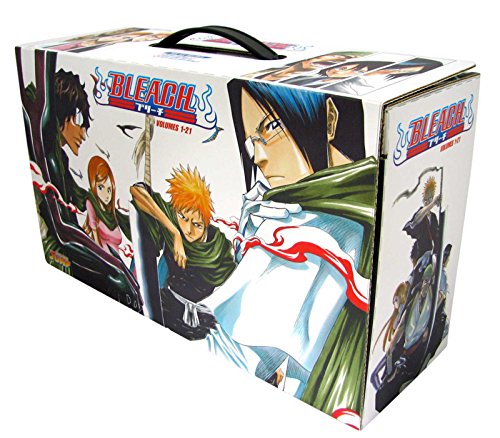
And if the screen version feels like too much too soon, the manga is worth a look. Bleach volumes go by fast, mostly because Tite Kubo’s art carries so much of the story. Fair warning: the manga is more graphic than the 2004 anime in places, since the anime censored it, so the 14+ guidance holds on paper too. But a reader controls the pace, can close the book, and skips the filler entirely. Box Set 1 covers the first 21 volumes, up through the Soul Society arc my 13-year-old loved.
What’s Next
If the manga route appeals, the Bleach manga reading order covers all 74 volumes, the three Viz box sets, and the ending the original anime never adapted.
How it fits the rest of the couch list is on the dad’s watchlist.
For how Bleach stacks up against the other two shows your kid will ask about, the Big Three parent guide covers Naruto and One Piece with the same content breakdowns.
If the next age-rating question in your house is Jujutsu Kaisen, that guide is here, and it is a genuinely different call.
And for a quick answer on any show, the Anime Finder has every series we have rated, filterable by age and by how much intensity your kid can take. Everything anime and manga on this site lives on the anime and manga hub.

About These Recommendations
I’m George, a dad of two. My wife did most of the reading to our kids when they were little, and I did my share. She’s a therapist, and she helps pick the books that actually matter for their development. Some of what’s on this site we’ve read, watched or played as a family. Some I tried on my own first. The rest comes from research: reviews, episode guides, other parents online, and whatever the kids bring home from school.
FAQ
The original 2004 series, probably, with a parent nearby. It sits in TV-14 territory and Common Sense Media itself says 16+, but its parent reviewers average 12+. Thousand-Year Blood War is a different call: it is rated TV-MA for graphic violence the original never showed, and it is the reason we rate the full series 14+ in our Anime Finder. If you say yes at 12, set a clear stop line before Thousand-Year Blood War.
No. Even the gentler 2004 series has bloody sword fights, frightening Hollow creature designs, and a hero who trades punches with his dad. Parent reviewers on Common Sense Media put that half of the show at 12+, the site itself says 16+, and the newer episodes are TV-MA. At 10, pick something from the 8+ or 10+ shelf in our Anime Finder instead.
Common Sense Media rates the original 2004 series 16+ and Thousand-Year Blood War 14+, which surprises most parents, since the newer series is the one carrying the TV-MA label. Its parent reviewers are more relaxed, putting the original at 12+ and Thousand-Year Blood War at 11+, though only a handful of parents have reviewed the new one. I land somewhere between them. The original series works for plenty of 12-year-olds with a parent nearby, Thousand-Year Blood War waits until 14 in our house, and that is why the whole run sits at 14+ in our Anime Finder.
Graphic violence, not sex or language. Thousand-Year Blood War adapts the manga’s final arc with far less censorship than the original anime, which means on-screen decapitations, heavy blood, and sustained horror episodes including a zombie stretch. In Japan it aired in a midnight broadcast slot with an R17+ classification.
Within the Big Three, yes, Bleach is the most violent, and Thousand-Year Blood War widens that gap. Against Demon Slayer it is roughly comparable, and both sit at 14+ in our Anime Finder. Jujutsu Kaisen goes further than either on body horror and emotional bleakness, which is why JJK sits at 16+ while Bleach stays at 14+.
The original series has a lot of comedy fan service: a perverted talking plush lion, chest jokes, a recurring nudity gag, all played for laughs and never explicit. Thousand-Year Blood War mostly drops the jokes, though exaggerated female character designs remain. If fan service bothers your family more than violence does, the old series is the noisier half.
Yes, and it is a good option for pacing, since a reader controls how fast the story comes at them. Worth knowing: the manga is actually more graphic than the 2004 anime in places, because the anime censored the worst injuries, so the 14+ guidance holds on paper too. The manga runs 74 volumes with zero filler, collected in three Viz box sets, and our Bleach reading order guide maps the whole run.