
Some links on this page are affiliate links. As an Amazon Associate and a Bookshop.org affiliate, I earn from qualifying purchases, at no extra cost to you. Read our affiliate disclosure.
Hogwarts Battle is the Harry Potter board game we’ve played with both kids. The early years were a lot of fun. Then the later boxes got harder and the games got longer, and somewhere in there we stopped. I’d still tell most families to buy it. You just need to know where it gets tough before you open the box.
Most of the other Harry Potter games are a game you already know with a Hogwarts board on top. That works for a 7 or 8-year-old and wears thin by 13. So here’s every Harry Potter board game worth buying right now, sorted by the age it fits, with the age printed on the box next to each one. A few popular ones are hard to find new at the moment, so those are at the end.
The Short Answer
Ages 7 to 9: Harry Potter Labyrinth. Ages 8 to 10: Clue Harry Potter or Catch the Golden Snitch. 11 and up: Hogwarts Battle. If you only buy one for kids across that whole range, buy Hogwarts Battle and start with the Year 1 box.
| Game | Age on the box | Players | Play time | Best for |
|---|---|---|---|---|
| Hogwarts Battle | 11+ | 2 to 4 | Longer each year | Families who’ll play a campaign |
| Harry Potter Labyrinth | 7+ | 2 to 4 | 20 to 30 min | Younger kids, little reading |
| Catch the Golden Snitch | 8+ | 3 to 4 | About 20 min | A quick, loud game |
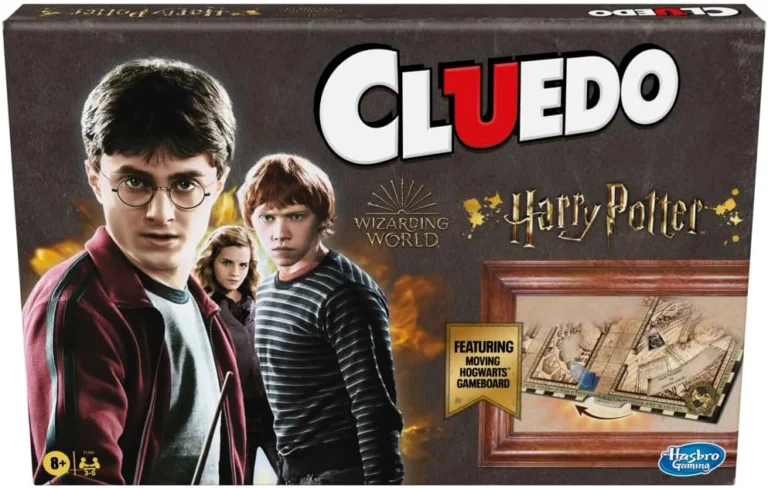
| Clue Harry Potter | 8+ | 3 to 5 | About 45 min | A classic game night |
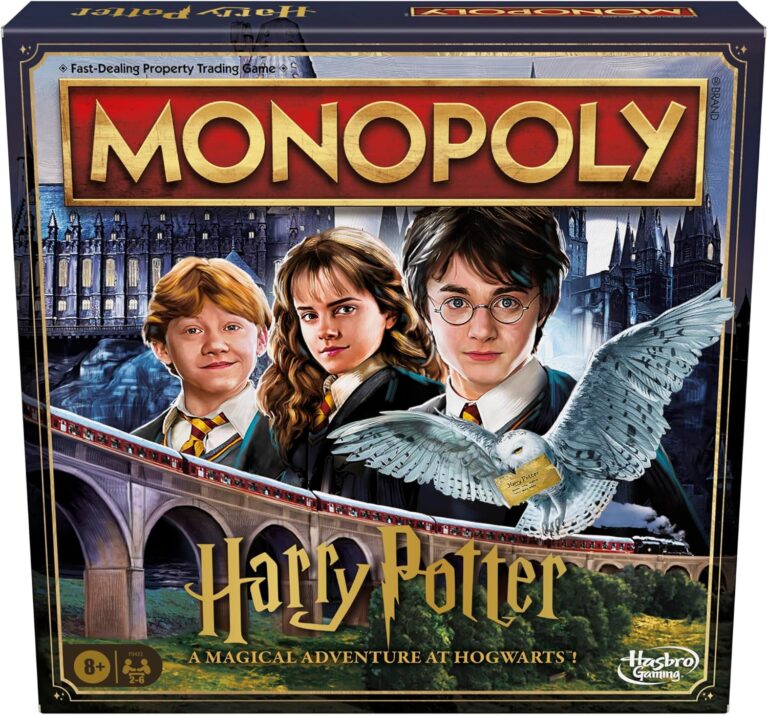
| Monopoly Harry Potter | 8+ | 2 to 6 | About 60 min | Kids who already like Monopoly |
Hogwarts Battle is the only one on this list that’s a different game from anything you already own. Everything else is a family classic with a Hogwarts theme, which is fine, as long as you know that’s what you’re buying.
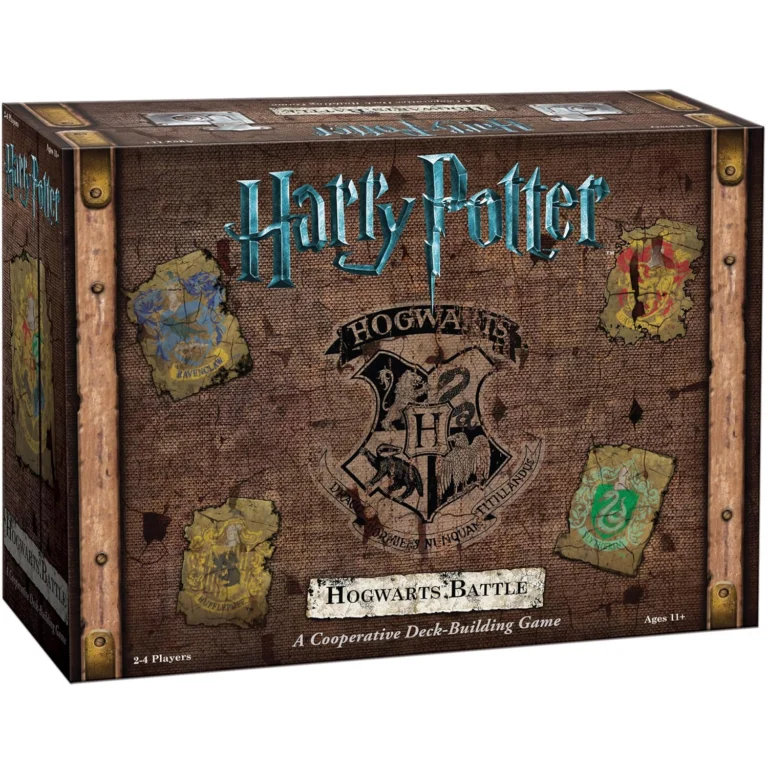
Hogwarts Battle: The One to Buy (11 and Up)
Hogwarts Battle is a cooperative deck-building game. You play Harry, Ron, Hermione or Neville. Everyone starts with a small deck of weak cards, buys better spells, items and allies as the game goes on, and works together to stop the villains from taking over the castle. The whole table wins or loses together, which matters with siblings.
The box is a campaign. Inside are seven smaller sealed boxes, one for each year at Hogwarts. Year 1 is a teaching game with a couple of easy villains. Each new year adds harder villains, nastier events and new cards, and you’re supposed to play them in order.
The catch is the difficulty curve. The early years were the best part for us. As the boxes went on, the games got longer and the villains got tougher, and our campaign stalled. That’s common. Year 4 is where a lot of tables stall, and the last boxes can beat a table of adults. My advice: play the early years for what they are, and don’t feel bad about stopping.
Two more things before you buy it. The cards have a fair amount of text, so a younger kid will need someone reading along. And the later boxes follow the later books. If your kid is halfway through the series, the villains in Year 6 and 7 will spoil things. Stop at the year that matches the book they’ve reached. Our Harry Potter age guide covers when each book fits.
Harry Potter Games for Ages 7 to 9
At this age, pick games with short turns and almost no reading. These two are quick, and an 8-year-old can play them on equal terms with a parent.
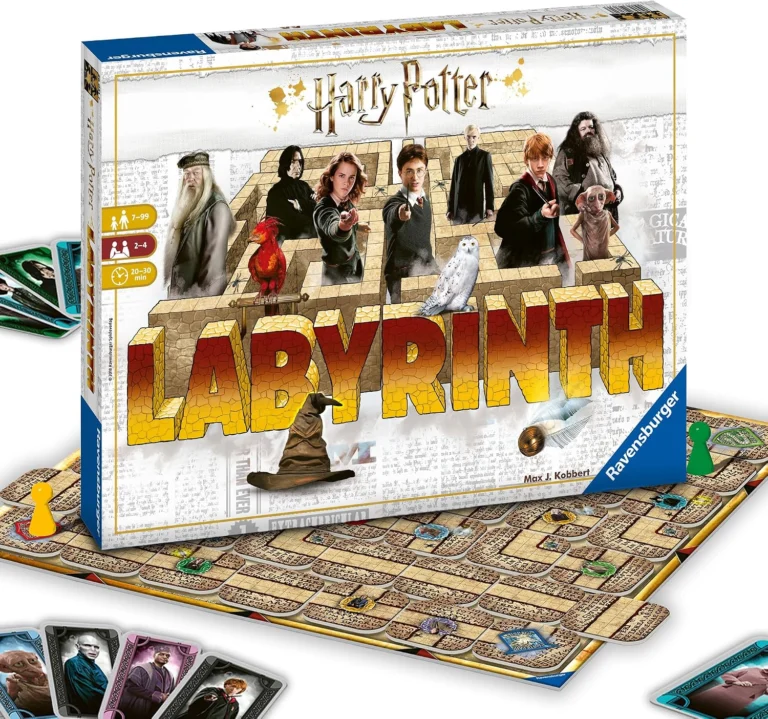
Harry Potter Labyrinth (7+). Ravensburger’s moving maze, with Hogwarts on the tiles. On your turn you slide a tile into the board, which shifts a whole row of walls, then try to reach the character or object on your card. There’s almost nothing to read. It’s the safest pick here for a younger kid and a parent to play together, and a game takes 20 to 30 minutes.
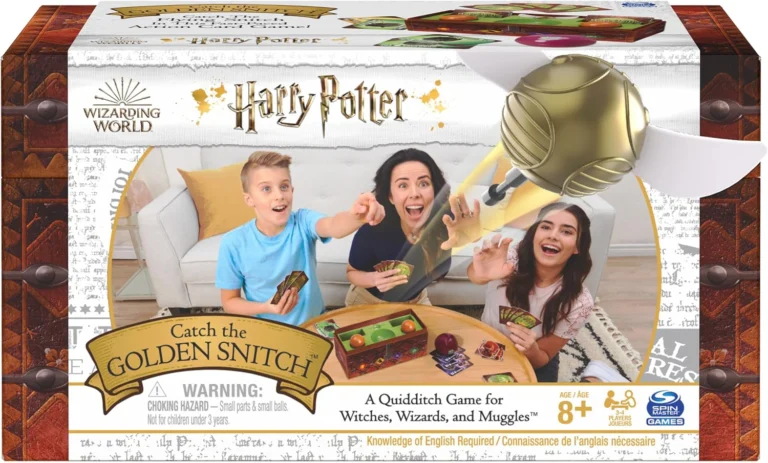
Catch the Golden Snitch (8+). We’ve played this one with the kids. It’s a fast Quidditch game: everyone grabs and passes cards while the Snitch pops up from the trunk in the middle of the table. It’s loud and silly and over in about 20 minutes. It needs 3 or 4 players, so it doesn’t work for a parent and one kid.
Family Classics With a Hogwarts Board (8 and Up)
These are games most parents already know how to play, which is the whole point. Nobody has to learn rules on a school night.
Clue Harry Potter (8+). The same deduction game, moved to Hogwarts. A student has vanished, and you work out who did it, with which spell or item, and where. Wheels in the corners of the board open secret passages and move the staircases, which is a nice touch. It needs at least 3 players and runs about 45 minutes. If your kids already like regular Clue, this is the easy upgrade.
Monopoly Harry Potter (8+). We’ve played this one too. It’s Monopoly with Hogwarts and Hogsmeade on the board and house points in place of money. The game ends when every location has been explored, and the box says about an hour. It’s a good buy for a kid who already loves Monopoly and loves Harry Potter. For anyone else, buy Clue.
Hard to Find Right Now
Some of the best-known Harry Potter games are easy to find in other roundups and hard to buy new. At the end of October 2026, these were either missing from Amazon US or only sold there by third-party sellers, often for well above their original price:
- Hogwarts Battle: Defence Against the Dark Arts. The two-player duel version. No new copies on Amazon US.
- Death Eaters Rising. A cooperative dice game set around the Order of the Phoenix. Only one third-party seller, at about double what it used to cost.
- House Cup Competition. A worker-placement game where each player runs a house. Third-party sellers only.
- Magical Beasts. A lighter family game from Goliath. Third-party sellers only.
If you find one of these at the original price in a game store, they’re worth a look. I wouldn’t pay double online for any of them while Hogwarts Battle is still easy to get.
Before You Buy
Count your players. Clue needs 3, and Catch the Golden Snitch needs 3 or 4. Hogwarts Battle and Labyrinth both work with 2, which makes them the better buys for one parent and one kid.
Trust the age on the box more for strategy games than for party games. The 8+ on Clue and the Snitch is about reading and attention span. The 11+ on Hogwarts Battle is about how hard the later years get. A younger kid can enjoy Year 1 with help. Year 6 is a different story.
Check where your kid is in the books. This only matters for Hogwarts Battle, but it matters a lot. The game follows the story year by year.
What’s Next
Not sure which book your kid is ready for? The Harry Potter age guide goes book by book and film by film.
Shopping for more than a game? Our Harry Potter gifts for kids covers box sets, illustrated books and LEGO by age.
Kid who builds more than plays? Start with the best Harry Potter LEGO sets.
Also into Middle-earth? Our Lord of the Rings board games guide ranks them for families.
Everything else lives on the Harry Potter hub.

About These Recommendations
I’m George, a dad of two. My wife did most of the reading to our kids when they were little, and I did my share. She’s a therapist, and she helps pick the books that actually matter for their development. Some of what’s on this site we’ve read, watched or played as a family. Some I tried on my own first. The rest comes from research: reviews, episode guides, other parents online, and whatever the kids bring home from school.
FAQ
The box says 11 and up. A younger kid can play the first year or two with a parent reading the cards. The later years get much harder and follow the later books, so 11 is a fair age for the full campaign.
Year 1 is easy and works as a teaching game. Each year gets harder, and many families find a big jump around Year 4. The last years can beat experienced adult players.
Harry Potter Labyrinth from Ravensburger. It’s rated 7 and up, has almost no reading, and a game takes 20 to 30 minutes. Catch the Golden Snitch is a good second pick at 8 if you have 3 or 4 players.
Yes. Hogwarts Battle plays 2 to 4, and it works well with one parent and one kid.
Three to five. It doesn’t play with two.
The later years do. Each box follows one book, so a kid who hasn’t finished the series will meet villains from books they haven’t read. Stop at the year that matches the book they’re on.