
Some links on this page are affiliate links, and as an Amazon Associate I earn from qualifying purchases, at no extra cost to you. Read our affiliate disclosure.
Black Clover came back this month after more than five years off the air, and I already know how it will reach our house. Somebody mentions it at school, a fight clip turns up in a feed, and the tile is sitting there on a service we already pay for. That is how every shonen show has arrived so far.
When it came to shonen anime for kids, the word itself never helped me much. My 13-year-old started drawing anime characters back in fifth grade, and not long after came the request to watch Demon Slayer. I figured it was a cartoon. Twenty minutes in, a demon ripped someone’s head off.
Demon Slayer is shonen. So is Dragon Ball, which my 11-year-old started at 9 and has been working through ever since. Both carry the exact same label, and they made for very different nights on our couch.
Below, every big shonen show gets a rating on the same age scale we use everywhere else on this site, with the reasoning behind each number.
Why the Shonen Label Misleads Parents
Shonen (少年) is Japanese for “young boy.” In manga, it names the type of magazine a story ran in, and those magazines are sold to boys of roughly 10 to 18. It describes the reader the publisher was hoping for. What happens inside the story can be anything at all.
If you want the full rundown of shonen, shojo, seinen and the rest, our guide to what shonen, shojo and seinen actually mean covers it.
The readership numbers surprised me. Shueisha’s own 2019 media guide put 53% of Weekly Shonen Jump readers at 19 or older, and under 13% at 12 or younger. Back in 2005, a survey by Index Digital found Jump was the favorite non-shojo magazine of elementary and middle-school girls. So in practice the word means sold to teenage boys and read by pretty much everyone, with adults as the biggest group.
The Short Answer
Most kids are ready for the gentle end of shonen around 10, but the label alone tells you almost nothing. With shonen anime for kids, the label names a kind of magazine and says nothing about what is safe to watch. Our Anime Finder, which is where all our ratings live, shows just how wide the spread gets.
The shonen shows we have rated run from 10+ (Dragon Ball, Haikyu!!) all the way to two shows we tell parents to skip entirely, Chainsaw Man and Attack on Titan. Both ends ran in shonen magazines. Chainsaw Man started out in the very same Weekly Shonen Jump that gave us Naruto and One Piece.
If you want a better hint than the word itself, look at what the American publisher did. When Viz launched an English edition of Shonen Jump, it marked the magazine for readers 13 and older. That is the company putting these exact series on US shelves, telling you its baseline reader is already a teenager. Individual shows go up from there.
If you want one safe first manga for a 10-year-old before reading any further, Haikyu!! is the one I would pick. It is all volleyball, it has zero content warnings in our Finder, and the 3-in-1 edition gets a kid three volumes deep before you have to decide on more.

Shonen by Age
Every age below comes straight from our Finder. The right-hand column shows where the manga was published, and Weekly Shonen Jump turns up at every age from 10+ to Skip.
| Show | Our age | Where it ran |
|---|---|---|
| Pokemon | 6+ | Based on the video games (not shonen) |
| Dragon Ball | 10+ | Weekly Shonen Jump |
| Haikyu!! | 10+ | Weekly Shonen Jump |
| Mob Psycho 100 | 10+ | Ura Sunday / MangaONE |
| Dr. Stone | 10+ | Weekly Shonen Jump |
| Naruto | 12+ | Weekly Shonen Jump |
| My Hero Academia | 12+ | Weekly Shonen Jump |
| One Piece | 12+ | Weekly Shonen Jump |
| Spy x Family | 12+ | Shonen Jump+ |
| Komi Can’t Communicate | 12+ | Weekly Shonen Sunday |
| Demon Slayer | 14+ | Weekly Shonen Jump |
| Bleach | 14+ | Weekly Shonen Jump |
| Fullmetal Alchemist: Brotherhood | 14+ | Monthly Shonen Gangan |
| Hunter x Hunter (2011) | 14+ | Weekly Shonen Jump |
| Black Clover | 14+ | Weekly Shonen Jump, then Jump GIGA |
| Frieren | 14+ | Weekly Shonen Sunday |
| Blue Lock | 14+ | Weekly Shonen Magazine |
| Jujutsu Kaisen | 16+ | Weekly Shonen Jump |
| The Promised Neverland (S1) | 16+ | Weekly Shonen Jump |
| Chainsaw Man | Skip | Weekly Shonen Jump (2018 to 2020), then Shonen Jump+ |
| Attack on Titan | Skip | Bessatsu Shonen Magazine (2009 to 2021) |
10+: Where Most Kids Start
This is the shelf for a kid who wants big fights and big energy but isn’t ready for blood.
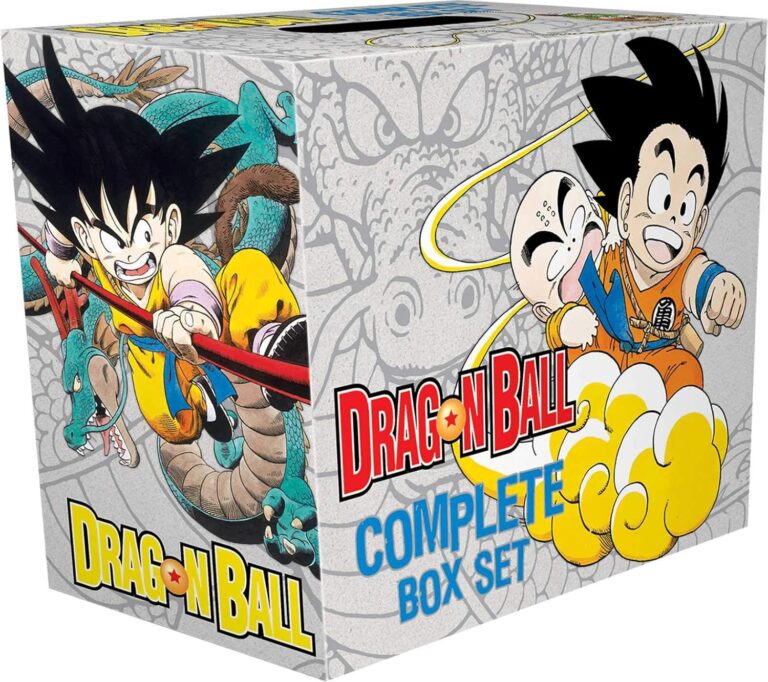
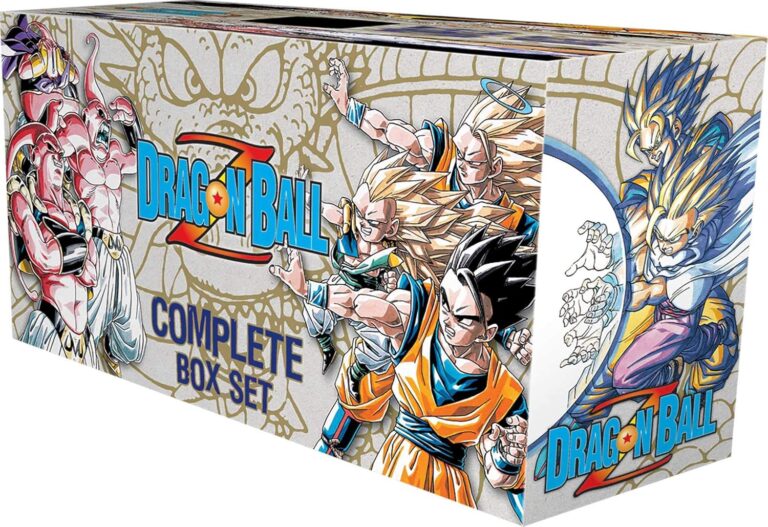
Dragon Ball is where our house started. My 11-year-old began the original series at 9, then worked through Z, Super and Daima. That’s a year under our own rating. The 10+ covers the whole franchise, including the longer, harder fights in Z and Super, plus some crude humor in the original that I had forgotten about until I was sitting next to it. I grew up watching DBZ after school, so I am biased, but the violence stays cartoonish the whole way through. If the books appeal, our Dragon Ball manga reading order lays out the full run.
Haikyu!! is the pick for a kid who loves the energy of shonen and doesn’t care about the punching. It’s volleyball. Nobody fights anybody, which is rare on this list.
Mob Psycho 100 is about a quiet middle schooler with enormous psychic powers who mostly wants to be normal. The psychic battles get loud without turning gory.
Dr. Stone swaps fists for chemistry, with some mild petrification violence. Saiki K. and Slam Dunk also sit at 10+ if your kid wants comedy or basketball instead.
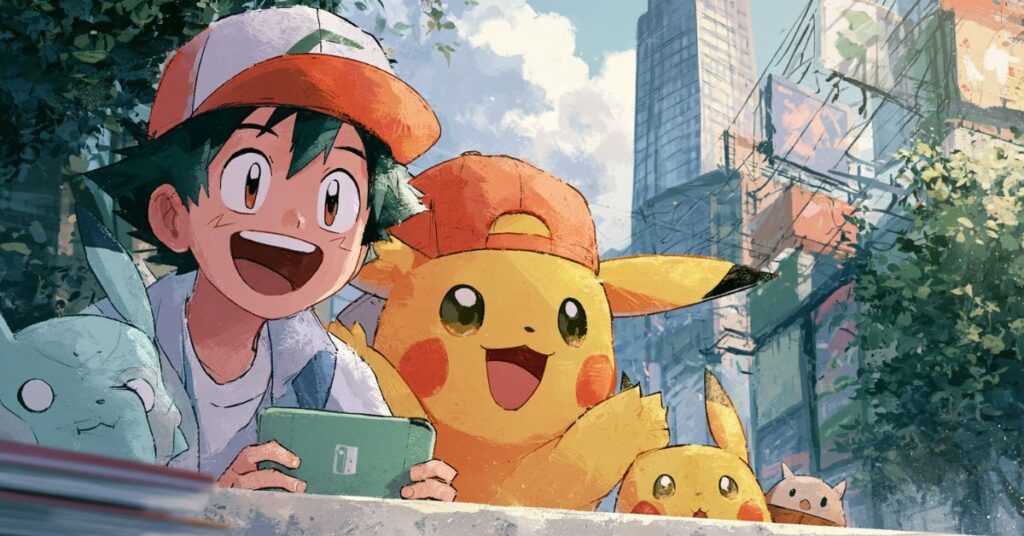
Younger than 10? Pokemon (6+) is the usual on-ramp. It isn’t really shonen, since the anime is built off the video games and made for kids, but a lot of shonen fans start there. Everything on this shelf can be filtered by age in the Anime Finder.
Next step up: Naruto or My Hero Academia.
12+: The Big Long-Runners
Most kids ask about this tier first, because these are the shows everybody at school has already heard of.
Naruto is where we are right now. My 11-year-old started it this year, and the deal in our house is the original series together now, with Shippuden waiting until the next birthday. Around episode 130 the filler hit hard, and my 11-year-old switched to the manga instead, which honestly saved us both. Our Naruto age rating guide explains where the original ends and why Shippuden is a separate call.

One Piece is pirate combat and, as the Finder puts it, a very long commitment. My 11-year-old watched the first 100 episodes, took a break, and came back later. That’s a pretty normal relationship with One Piece. The One Piece age rating guide covers the arcs worth previewing.

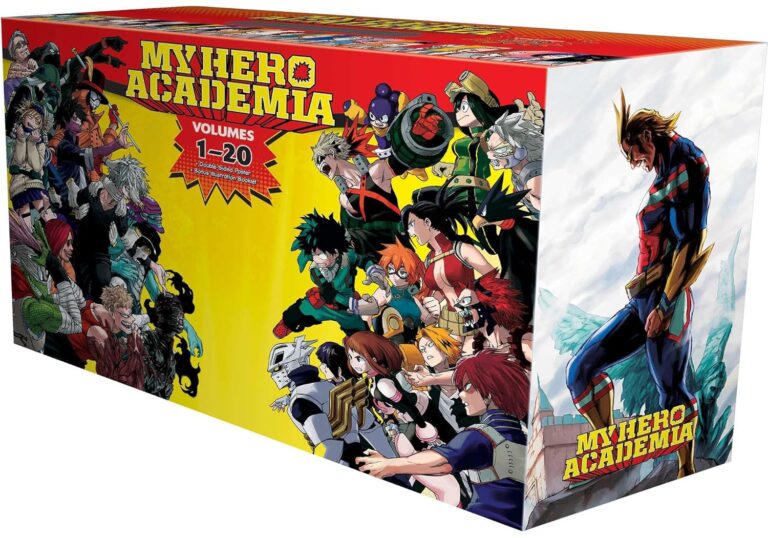
My Hero Academia is superhero violence at a level most 12-year-olds handle fine, though our Finder notes it gets darker in later seasons. This is the first spot on the ladder where the show your kid starts is not quite the show they finish.
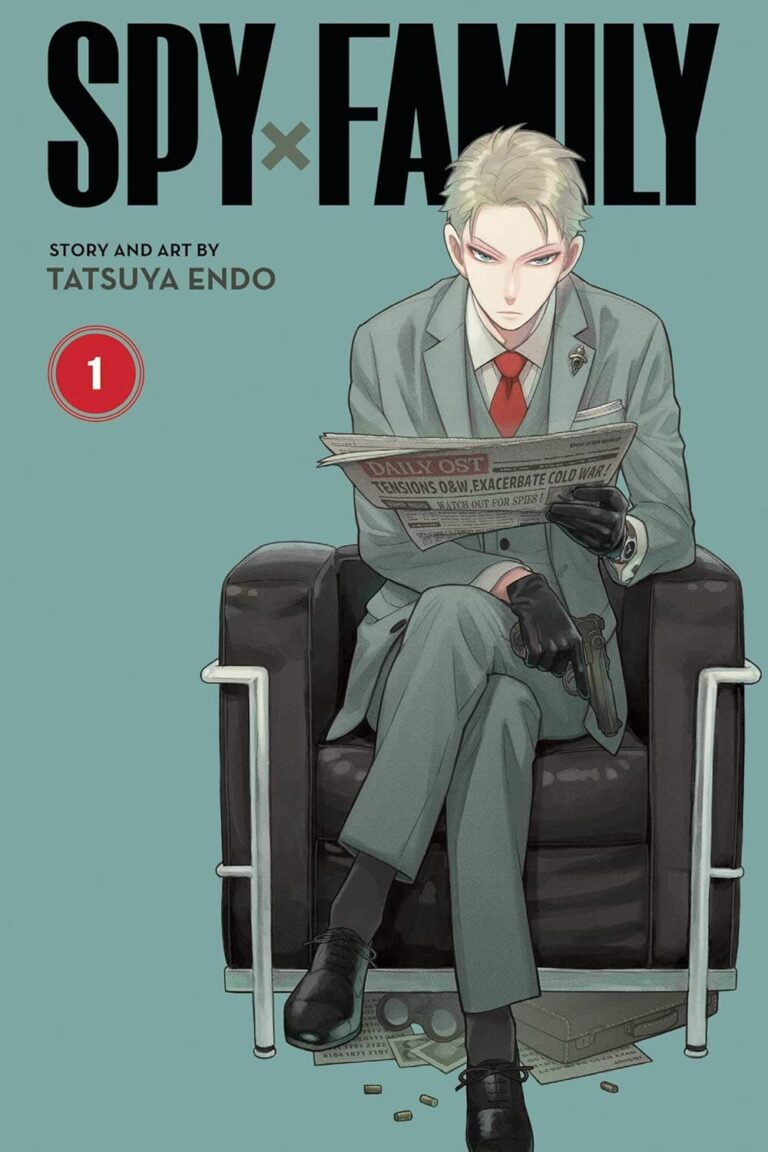
Spy x Family is the gentlest show in this tier: a spy dad, an assassin mom, a telepathic kid, and only cartoon action violence. It ran on Shonen Jump+, Shueisha’s web version of Jump. Kuroko’s Basketball and Komi Can’t Communicate land at 12+ too.
If you are choosing between Naruto, One Piece and Bleach specifically, our Big Three parent guide compares them side by side.
Next step up: Demon Slayer, and that is a real step.
14+: Real Stakes, Real Blood
This is where blood stops being implied. My 13-year-old sits right at this line, so it’s the tier I think about most.
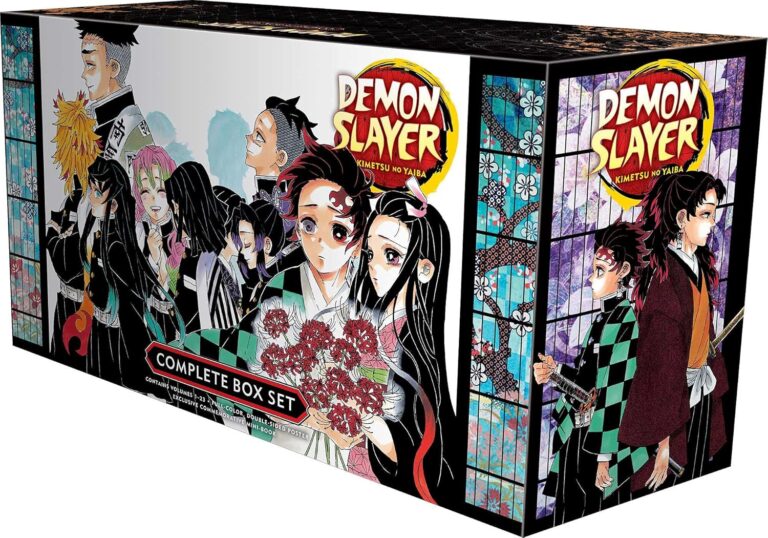
Demon Slayer carries graphic demon violence, decapitation and blood in our Finder. After we watched Mugen Train together, my 13-year-old cried and my 11-year-old wanted a sword by morning. My 13-year-old handles the show fine. My 11-year-old still ends up covering both eyes or hitting pause during the worst fights, and that’s exactly why it sits at 14 and not 12. Our Demon Slayer hub has everything else.
Bleach is sword combat with blood, horror creature designs and character deaths. My 13-year-old finished the Soul Society arc and wanted more. My 11-year-old met one Hollow too many and decided to come back to it later. The 2004 series is far milder than the new Thousand-Year Blood War, and our Bleach age rating guide splits the two.
Fullmetal Alchemist: Brotherhood gets recommended as a starter show often, but our Finder flags war violence, body horror and genocide themes. Expect it to be heavy going for a younger teen.
Hunter x Hunter is where forums and our Finder disagree most. Parent forums often recommend it for 10-year-olds because the early arcs feel like a bright adventure. Then the Chimera Ant arc arrives, and from everything I read, it is the darkest stretch of the series, with torture, body horror and character death. That arc is the whole reason it lands at 14+ here.
Black Clover is the one with new episodes airing right now. The fantasy violence and mild language are the easy part. Fan service is the bigger question, and our Finder notes it increases in later seasons, and the new season picks up late in the story. Frieren also sits at 14+, which surprises people because it’s so quiet. The weight there is emotional.
Next step up: nothing, for a while. The 16+ shelf is a different kind of dark.
16+: The Dark Era
We have not watched Jujutsu Kaisen together, and I’m not showing it to either kid yet. Graphic violence, body horror and major character deaths are the Finder warnings, and the Shibuya Incident arc in Season 2 is where it gets considerably darker and stays there. Our Jujutsu Kaisen age rating guide has the full reasoning.
The Promised Neverland (Season 1) leans far less on gore than the shows around it. It runs on psychological horror and children in danger, and for some kids that kind of fear sticks harder than blood does.
Skip: Shonen That Isn’t for Kids
Chainsaw Man ran in the same Weekly Shonen Jump as Naruto and One Piece from 2018 to 2020, then moved to Shonen Jump+. Our Finder flags extreme graphic violence, sexual content and gore, and marks it adults only.
Attack on Titan ran in Kodansha’s Bessatsu Shonen Magazine from 2009 to 2021. Extreme violence, genocide and psychological horror put it on our skip list, and I don’t think it’s a close call.
If none of these fit your kid right now, there is plenty of great anime outside shonen entirely. Our full anime-by-age watchlist covers it.
Why Shonen Gets Darker
Two separate things push shonen darker, and parents usually only hear about one of them.
Inside one show: the conveyor belt
Long-running shonen escalates as the kids who started it grow up. A show that launches when its readers are 11 is often writing for 15-year-olds a few years later, and the stories change to match. Naruto turns into Shippuden. The 2004 Bleach series eventually leads to Thousand-Year Blood War, which is rated TV-MA. My Hero Academia gets darker in its later seasons, and Hunter x Hunter walks straight into the Chimera Ant arc.
Episode 1 is rarely the hard part. Check which arc your kid will actually reach, and preview the ceiling.
Across a generation: Jump’s dark era
The newer Jump hits lean darker, too. Jujutsu Kaisen ran from 2018 to 2024, and Chainsaw Man started the same year. Both read a lot darker than the Dragon Ball era I grew up on. Kagurabachi, a revenge story with swords that Jump is lining up as its next anime for April 2027, keeps going in that direction.
Over the same stretch, Jump’s print run fell from a peak of 6.53 million copies (the 1995 New Year issue) to about 985,000 in April through June 2026, according to the Japan Magazine Publishers Association, and as the 2019 data showed, more than half its readers are 19 or older. I can’t prove the stories got darker because the readers got older. It’s hard not to connect the two.
The label misleads in the other direction as well. One Punch Man came out of a seinen web magazine aimed at adult men, and we rate it 10+. Delicious in Dungeon and Witch Hat Atelier are both seinen, at 12+ and 10+. Vinland Saga started in Weekly Shonen Magazine before moving to the seinen Afternoon, and sits at 14+. That puts a seinen show at 10+ on our list while two shonen shows sit on the skip list.
Then there’s Solo Leveling, which plenty of kids file under shonen because it looks and fights like one. It isn’t Japanese at all. It began as a Korean web novel and became a manhwa (a Korean comic), so the Japanese labels don’t apply. It came into our house through my 13-year-old’s TikTok edits, we watched it together, and our Solo Leveling age rating guide lands on 14+.
How to Check Any Shonen Show
This is what I actually do now when a new title comes up.
- Ignore the word shonen. Look up the specific show in the Anime Finder and read the warnings, which matter more than the number.
- Check the back cover of the manga. Viz rates Demon Slayer T for Teen (13 and up), and both Jujutsu Kaisen and Chainsaw Man T+ for Older Teen (16 and up). We’re stricter on both, putting Demon Slayer at 14+ and Chainsaw Man on the skip list, but the back cover is a fast second opinion.
- Preview the hardest arc instead of the pilot. Shibuya for Jujutsu Kaisen, Thousand-Year Blood War for Bleach, Chimera Ant for Hunter x Hunter, Shippuden for Naruto. An hour on the ceiling tells you more than a whole first season.
- Watch the first episode of anything new together. The genre guide linked above has a short list of red flags worth knowing.
One thing I stopped trusting is the idea that anything from Shonen Jump is probably fine at 12. Chainsaw Man and Jujutsu Kaisen both ran there.
What’s Airing Now
As of October 2026.
Black Clover Season 2 premiered October 3, 2026 on TV Tokyo and is streaming on Crunchyroll. The episode count has not been officially announced. These are the first new episodes since March 2021. We rate Black Clover 14+, mostly because of the fan service warning, so it’s a yes for a mid-teen and a preview-first for anyone younger. The manga has since moved from Weekly Shonen Jump to the quarterly Jump GIGA, which is why the gap was so long.
Dragon Ball Super: Beerus, a re-edit of the arc that opens Super, premiered in Japan on October 11. Dragon Ball sits at 10+ in our Finder, and this is the same material. In the US it streams on Crunchyroll and Hulu from October 11, and on Netflix from October 17.
Three more Jump adaptations start this season: Psyren (October 5, based on a 2007 to 2010 Jump series), Super Psychic Policeman Chojo (October 6, Crunchyroll) and Blue Box Season 2 (October 4, Netflix). We haven’t published ratings for any of them yet, so I won’t guess.
Further out, the Kagurabachi anime arrives in April 2027 from studio Cypic, streaming on Crunchyroll outside Japan. It isn’t rated by us yet either. It’s on the list.
What’s Next
For a quick answer on any single show, the Anime Finder has every series we have rated, filterable by age and intensity.
If your kid is ready for anime but not for shonen, the Dad’s Guide to Anime has the rest of our family watchlist.
Shows that keep the pace and leave the gore out are in our wholesome anime for teens guide.
Naruto, One Piece and Bleach are the three your kid will ask about most, and the Big Three parent guide breaks them down together. If the manga route wins, start with the Naruto manga reading order.
Everything anime and manga on this site lives on the anime and manga hub.

About These Recommendations
I’m George. I read to my kids for 10+ years before they started reading on their own. My wife’s a therapist who helped pick books that actually matter for development. Everything on this site got tested on our family first.
FAQ
Some of it is. Shonen tells you a magazine was sold to teenage boys and says nothing about what is inside the story. In our Anime Finder, shonen shows range from 10+ (Dragon Ball, Haikyu!!) to two we tell parents to skip (Chainsaw Man, Attack on Titan). Check the specific show before the label.
In Japan, the target reader is a boy of roughly 10 to 18. Most Weekly Shonen Jump readers are adults, though: 53% were 19 or older in Shueisha’s 2019 media guide. For parents, 10 is a sensible floor for the gentlest shonen, while the darker shows sit at 14+ or 16+, and two land on our skip list.
Dragon Ball, Haikyu!!, Mob Psycho 100 and Dr. Stone are all 10+ in our Anime Finder. Haikyu!! is volleyball with no fighting at all, which makes it the safest start. The next step up is Naruto, My Hero Academia or One Piece, all rated 12+.
Yes. It ran in Kodansha’s Bessatsu Shonen Magazine from 2009 to 2021. It is one of only two shows in our Anime Finder we tell parents to skip. The other is Chainsaw Man, which ran in Weekly Shonen Jump, the same magazine as Naruto and One Piece. That pairing is the clearest proof the shonen label is no safety rating.
No. Solo Leveling started as a Korean web novel and became a manhwa, a Korean comic, so the Japanese shonen label does not apply, even though it looks and fights like a shonen show. We rate it 14+ for intense action violence, character deaths and dark themes.
Usually not. The manga is often as graphic as the anime and sometimes more, since older anime like the 2004 Bleach series toned their source down. Check the publisher rating on the back cover: Viz rates Demon Slayer T for Teen (13 and up) and Jujutsu Kaisen T+ for Older Teen (16 and up).