
Some links on this page are affiliate links, and as an Amazon Associate I earn from qualifying purchases, at no extra cost to you. Read our affiliate disclosure.
Princess Mononoke sits on the same Ghibli shelf as Totoro. Same studio, same director, the word princess right there in the title, and a poster of a girl riding a giant white wolf. Everything about the cover says family movie night.
Then the film starts. A boar god covered in writhing black worms charges a village, and not long after that an arrow takes a man’s arms clean off. That cover and that opening do not look like they belong to the same film.
My kids are 11 and 13 now, and both have seen it. I waited until they were 11 and 12, which meant my younger one saw it a little before 12, with me right beside them the whole way through. That was a judgment about one particular kid, and I would not go any younger than that. No regrets.
If you want every Ghibli film sorted by age, our Studio Ghibli age guide covers the whole catalog. The Princess Mononoke age rating gets its own write-up here, because it is the one that catches families off guard.
The Short Answer
We rate Princess Mononoke 12+. The official Princess Mononoke age rating in the US is PG-13, for images of violence and gore: arrows that take off arms and a head, bloody wounds on people and animals, and a demonic curse that eats into the hero’s body. The language is mild and there is no sexual content. You can see it alongside every film and show we rate on our anime age ratings list, with two content warnings: graphic battle violence and body horror elements.
Twelve is where I would start most kids, with an adult in the room. Treat that number as a floor. If your kid is sensitive to blood, to animals getting hurt, or to nightmares, waiting until 13 is a perfectly good call.
So why 12 and not 13? The violence hits hard when it comes, but each burst is short, and long quiet stretches of forest and village life sit between them. Nothing sexual happens, the swearing is a handful of mild words, and the film is firmly on the side of life. The outside numbers bracket it from both directions. Common Sense Media’s parent and kid reviewers say 11. Their editors say 12, and so does the UK’s new 2025 certificate. An Australian parent guide says it is not suitable under 13.
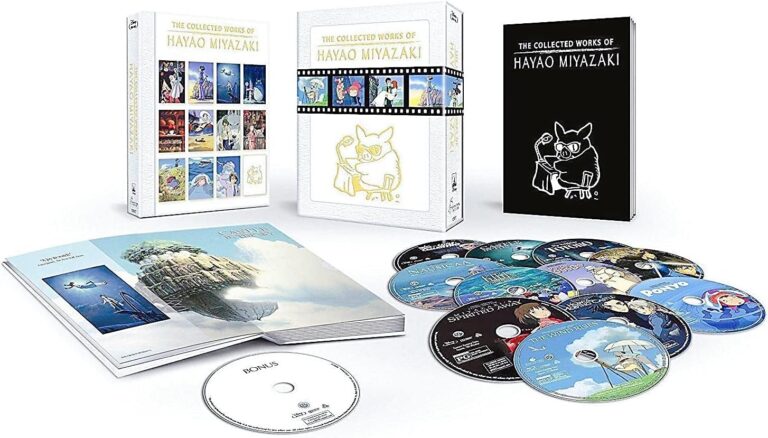
When you decide it is time, the Miyazaki Blu-ray box set has Mononoke along with ten of his other films, Spirited Away and Totoro included. Owning the disc means you control the pause button, and with this film that is worth having.
Why the Ratings Disagree
Depending on the country and the year, this film is labeled anything from PG to M.
| Where you look | What it says |
|---|---|
| United States (MPA) | PG-13, for images of violence and gore |
| United Kingdom (BBFC) | PG for every release from 2001 to 2014; 12A for the 2025 4K re-release |
| Australia (Classification Board) | M, for moderate animated violence |
| Common Sense Media | 12+ (parents and kids both say 11+) |
| Children and Media Australia | Not suitable under 13 |
| Our rating | 12+ |
Nobody in that table is lying. The UK row is the most useful one, because it is the same film rated twice. The BBFC passed it at PG for every release from 2001 through 2014, then looked again when the 4K restoration reached UK cinemas in August 2025 and moved it up to 12A. Its advice now cites moderate violence, threat and injury detail, occasional dismemberment, decapitation and bloodshed, and images of severed limbs and heads.
The restoration cleaned up the picture without changing what happens in it, so the jump to 12A is the guidelines catching up with what was always there. If an old DVD box on your shelf says PG, that is the old certificate.
The US PG-13 dates back to the 1999 release, for images of violence and gore. Some parent sites also list sexual content as a reason. The MPA does not, and there is very little of it in the film.
What Is Actually in It
Violence on one axis, everything else on another. With Mononoke, nearly all the weight sits on the first.
Violence and body horror
This is where the 12 comes from. Arrows take off arms and a head, there are sword fights, guns and grenades, and wounded people and animals bleed where you can see it. Demons are drawn as boiling masses of worm-like tendrils, and the curse on Ashitaka’s arm keeps getting worse.
What makes it workable at 12 is the pacing. The violent moments arrive suddenly and end quickly, and between them the film slows right down (long walks through the forest, daily life in Iron Town) so a kid gets time to breathe.
Animal death
Most parent guides skip this one, and for a lot of kids it is the hardest part. The boar gods and wolves here are characters with names and voices, and they get shot, bleed and die on screen. Moro, the wolf god, carries a gunshot wound for most of the film and is slowly dying from it.
If your kid is the one who cries at nature documentaries, weigh this more heavily than the human fights.
Themes that land harder than the blood
There is no clean villain. Lady Eboshi runs Iron Town, shelters lepers everyone else turned away, buys young women out of brothels and gives them real work. She also shoots a god. The samurai, the monk Jigo, the boar clan and San all have their reasons. A kid who wants a bad guy to root against will not get one.
Underneath that run some heavier threads: disease and outcasts (the BBFC specifically flags people being shunned because of their medical condition), a hero slowly dying of a curse he picked up protecting his village, grief for a forest being cut down, and a passing reference to suicide. None of it is graphic, though it is all the kind of thing a 12-year-old will want to talk through afterward.
Language, sex, and everything else
This is the reassuring part. The language is a handful of mild words along the lines of damn, bastard and piss, and the exact words shift a little between the subtitles and the dub.
Nothing sexual happens on screen. Some men wear loincloths. The Iron Town women flirt with Ashitaka and tease him about being handsome, and the film mentions that they used to work in brothels. A 10 or 11-year-old may well ask what a brothel is. A plain answer is enough: a place where women were forced into a hard life, and Eboshi bought them out of it.
There is a little drinking. If language or sexual content is what worries you, this film will not be the problem.
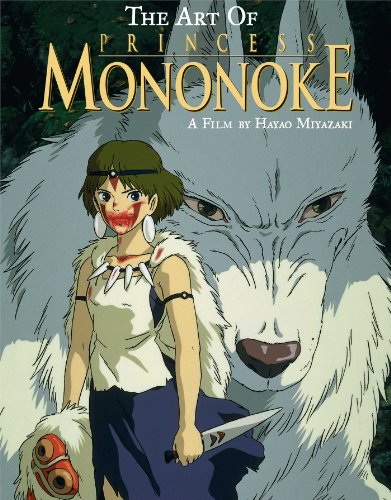
For a kid who draws, the art book is worth knowing about whatever age you land on. The Art of Princess Mononoke is packed with concept art and background paintings, and it shows how much work went into every frame of the forest.
Scene by Scene
The intense moments, in the order they come.
1. Nago, the demon boar. The film opens on it. A boar god covered in writhing, worm-like tendrils charges Ashitaka’s village. He shoots it, and its flesh melts away to bone on screen. For a young kid this is the scariest image in the film, and it comes first.
2. The curse. During that fight the tendrils grab Ashitaka’s arm and leave a mark. It spreads and darkens as the story goes on, and later it swells and moves by itself. This is the body horror that keeps coming back.
3. The samurai on the road. The cursed arm gives Ashitaka’s arrows unnatural force. One arrow takes off a samurai’s arms, another takes off a head. This is the scene parents mention most, and it comes early.
4. San and Moro. Our first look at San has her sucking blood from Moro’s gunshot wound and spitting it out, face smeared red, before she pulls on her mask and stares Ashitaka down. Short and striking, and more strange than scary.
5. Iron Town and the lepers. Bandaged lepers who build guns for Eboshi. Nothing violent, but disease and disfigurement are shown openly.
6. San attacks Iron Town. San comes over the rooftops to kill Eboshi, and the two fight with knives. Ashitaka steps in, gets shot through the body, and still carries San out of the town. There is blood.
7. Okkoto’s boar army. This is the one parents forget about and then wish they had remembered. The boar clan charges and gets cut down by guns and grenades, leaving piles of dead boars. Hunters wearing boar skins trick the wounded Okkoto, and he turns into a demon in front of you, with the corruption swallowing San as well.
8. The Forest Spirit loses its head. Eboshi shoots the head off the Forest Spirit in its giant night form. Black ooze floods the land and kills everything it touches. Moro’s severed head, already dead, comes back for one last bite and tears off Eboshi’s arm. This is the peak of the film.
9. The ending. The head is returned, the land heals, and the curse lifts. It is hopeful, but nobody is fully forgiven, and San still hates humans when the credits roll.
Age by Age: 8, 10, 12, and 13
At 8: no. The opening alone is too much. Totoro (6+) and Spirited Away (8+) are the Ghibli films for this age.
At 10: probably not yet. Common Sense Media’s users put it at 11, and you know your own kid better than any rating does. If you try it at 10, watch the opening yourself first and sit beside them. The first three scenes will tell you quickly whether it is working. Nausicaa of the Valley of the Wind is the gentler practice run (more on that below).
At 12: yes, with you in the room. That is our floor, the number in our ratings list, and now the UK’s certificate as well.
At 13: an easy yes, and the better first viewing for kids who are sensitive to blood, animals getting hurt, or bad dreams.
If the answer in your house is not yet, have a yes ready. The Anime Finder filters by age, and its 8+ and 10+ shelves have plenty of fantasy and adventure without the severed limbs.
How It Compares
Ages here come from our Finder unless I say otherwise.
Spirited Away (8+) and Howl’s Moving Castle (8+). Creepy in places, never bloody. Howl’s has some brief war scenes. Going from either of these to Mononoke is a big jump.
Nausicaa of the Valley of the Wind. Not in the Finder yet. Our Ghibli guide puts it at 9+, it is PG in the US for violence, and it covers similar ground (war, nature, a heroine caught between two sides) with far less blood.
The Boy and the Heron (12+). Same age, different kind of hard. Heron is difficult because of grief and strangeness, while Mononoke is difficult because of blood.
Naruto (12+). Same number. Naruto’s fights are stylized and its emotional beats are devastating, spread over 720 episodes. Mononoke shows you the wound, but it is all over in about two and a quarter hours. Our Naruto age rating guide has the full breakdown.
Demon Slayer (14+). Two years above. Decapitations come far more often and demons eat people. If your kid already watches Demon Slayer comfortably, Mononoke is unlikely to be the thing that scares them. More on our Demon Slayer hub.
Jujutsu Kaisen (16+). A different league altogether, and the Jujutsu Kaisen age rating guide explains why.
Watching It Together
The preview rule is simple. Watch the opening yourself: Nago, the curse, and the samurai on the road. If your kid will be fine with those, most of the film sits at about that level until the Okkoto and Forest Spirit climax, which is the hardest stretch. Unsure? Preview that too.
At 134 minutes it is a long sit for a 10-year-old and fine at 12. Screen size matters too. The 2025 4K restoration put it back in cinemas, including IMAX screens in the US, and a kid who is fine with these scenes on a TV may not be fine with them several stories tall.
Sub or dub? Both are on HBO Max in the US. The 1999 English dub has Billy Crudup as Ashitaka, Claire Danes as San, Minnie Driver as Eboshi, Gillian Anderson as Moro and Billy Bob Thornton as Jigo, and it holds up well. For a younger viewer the dub is easier, since nobody wants to read subtitles mid-fight.
Outside the US it streams on Netflix in the UK and most other countries, though not in Canada or Japan.
Afterward, ask a few questions and let them argue. Who was the villain? Why does San hate humans so much? Was Eboshi a good person? Should Ashitaka have picked a side? None of them has a tidy answer, and that conversation is where a 12+ film earns its rating.
What’s Next
If Mononoke is too much right now, our Spirited Away age rating covers the gentler pick, scene by scene.
For the rest of the studio’s films, from Totoro up to The Boy and the Heron, the Studio Ghibli age guide sorts every one by age.
If the next request in your house is a long-running series, the Big Three parent guide gives Naruto, One Piece and Bleach the same treatment side by side.
And for a one-line answer on anything else, our anime age ratings list covers all 77 shows and films we rate, with content warnings for each. Everything else we have written on this side of the site lives on the anime and manga hub.

About These Recommendations
I’m George. I read to my kids for 10+ years before they started reading on their own. My wife’s a therapist who helped pick books that actually matter for development. Everything on this site got tested on our family first.
FAQ
For most 10-year-olds, not yet. Early in the film a demon boar rots down to bone on screen, and arrows take off a man’s arms and another man’s head. We rate it 12+. If you try it at 10, watch the opening yourself first and sit beside them the whole way through.
The MPA rated it PG-13 for images of violence and gore. That means severed arms and heads, bloody wounds on people and animals, and a demonic curse that spreads across the hero’s body. The language is mild and there is no sexual content, so the violence is the whole reason for the rating.
It is a family film for older kids. It comes from Studio Ghibli, but it is Miyazaki’s most violent film and it is PG-13 in the US. We rate it 12+. For younger kids, My Neighbor Totoro and Spirited Away are the Ghibli films to start with.
12A since its 2025 4K re-release. Every earlier UK release, from 2001 to 2014, was rated PG, which is why older DVDs and Blu-rays still say PG. The BBFC’s 2025 advice cites moderate violence, threat and injury detail, including images of severed limbs and heads.
Yes, by a distance. Nausicaa has battles and Howl’s Moving Castle has war scenes, but only Mononoke shows dismemberment, decapitation and a god rotting on screen. Grave of the Fireflies is the more upsetting Ghibli film for different reasons, since its weight comes from grief and loss instead of gore.
Very little of either. There are a handful of mild words like damn and bastard, some men in loincloths, a bit of flirting, and a mention that the Iron Town women once worked in brothels. Nothing sexual is shown on screen. If those are your worries, this film is not the problem.
Yes. Spirited Away is creepy in places, with No-Face and the parents turning into pigs, and we rate it 8+. Mononoke is bloody, with severed limbs, demon corruption and animals dying on screen, and we rate it 12+. Plenty of kids who loved Spirited Away at 8 will need a few more years for this one.