
Some links on this page are affiliate links, and as an Amazon Associate I earn from qualifying purchases, at no extra cost to you. Read our affiliate disclosure.
The Apothecary Diaries came back on October 2 for Season 3, new episodes every Friday on Crunchyroll. A movie opens in Japan on December 11. If you have a teenager who likes anime, this show is probably on their radar right now, and if that teenager is a girl, even more so. That makes The Apothecary Diaries age rating worth checking before episode 1.
From the outside it looks like the gentlest thing on the service. A sharp, sarcastic girl named Maomao works in an imperial palace and solves mysteries with her knowledge of medicine and poison. Pretty costumes, soft colors, a slow-burn romance. My daughter is 13, and on paper Maomao is exactly the kind of heroine I would want in front of her. She is smarter than every adult in the room and does not care who knows it.
Then you look at where she works. The palace in question is the rear palace, the emperor’s harem, and the show never forgets it. That gap between how it looks and what it is about is the reason this page exists, and the reason our rating is higher than the one on the streaming service.
The Short Answer
We rate The Apothecary Diaries 16+. You can see it next to every other show we have rated on our anime age ratings page, which is where all our ratings live.
Our Finder entry carries three warnings, in this order: implied sexual themes, feudal court politics, and poisoning. The first one sets the number. When I added the show, I wrote that streaming platforms rate it 14+ but the court setting has implied sexual themes throughout, and that mature audiences felt more fitting. I still think so, and Season 2 only makes the case stronger. The violence is mild. What a 13-year-old is really signing up for is a story where sex, as a job and as a political tool, sits under almost every mystery.
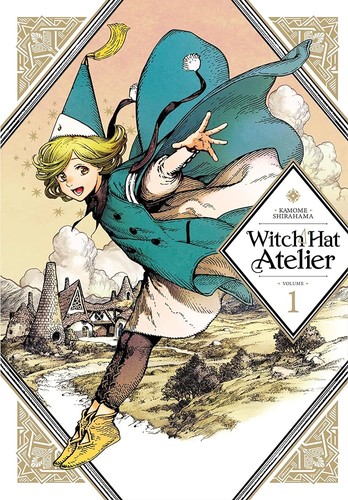
If your kid is 12 or 13 and wants a clever girl with a craft, Witch Hat Atelier is the closest yes I know. Coco learns magic the way Maomao practices medicine, by studying it, and it sits at 10+ in our Finder.
What the Labels Say
The official labels land anywhere between 12 and 15. Here they are side by side.
| Where you look | What it says |
|---|---|
| Crunchyroll (US streaming and discs) | TV-14 |
| Common Sense Media | 14+ (its parent reviewers say 15+) |
| UK, BBFC (Season 1 discs) | 15 for episodes 1 to 12, 12 for episodes 13 to 24 |
| Australia | M, for sexual themes, animated violence, and sexualized imagery |
| New Zealand | Notes sexual themes, sexual violence themes, and suicide themes |
| Our rating | 16+ |
The professional reviewers and the parents disagree here. Common Sense Media’s own review says 14+, while the parents who left reviews there average 15+. Almost every label on that list was also set on Season 1. Season 2 is where the backstory gets spelled out, and that is the part I weigh most heavily.
The Books: Two Manga and the Light Novels
The books carry their own labels. A lot of teens find this story on paper first, and there are three ways in. All three tell the same story in the same palace, so our 16+ applies to the books too, whatever the spine says.
The light novels are the original by Natsu Hyuuga. J-Novel Club publishes them as ebooks and Square Enix in print, with 16 volumes out in English as ebooks and the print editions catching up. Prose spells out what the anime only hints at, so this is the frankest version.
The Square Enix manga, drawn by Nekokurage, is the one most teens mean when they say “the manga.” It has been out in English since 2020, volume 16 is due in November, and the publisher rates it T for Teen. It leans into the romance and lines up closely with the anime.
The Viz manga, Maomao’s Notes on the Inner Palace, is a separate adaptation drawn by Minoji Kurata. It has been running in Japan since 2017 and reaches North American readers on October 20, with volume 2 in December. Viz rates it Teen Plus, a notch above T, and readers describe it as more focused on the mysteries.
What Is Actually in It
I split this into separate pieces on purpose, because a parent who is fine with one of them may not be fine with another.
Sexual themes: mostly implied, always there
The show is careful about what it puts on screen. There are no sex scenes. The closest it gets to nudity is a bathhouse scene in episode 18, where the women are mostly covered by towels, plus brief masked nudity in a bedroom that the UK board noted. Common Sense Media describes the sexy stuff as clothes in disarray, “showing cleavage but nothing more.”
What is implied is a different list. Maomao was kidnapped and sold into the palace as a servant. The consorts she serves are there to give the emperor heirs, and the show talks about his visits to their bedrooms openly. She grew up in a pleasure district, the courtesans who helped raise her are recurring characters, and plenty of jokes run on it (in one scene a palace official is convinced she spent the night with a soldier, when all she did was arrange him a night at the brothel). Aphrodisiacs come up as plot points more than once.
Season 2 goes further. Around episodes 32 and 33 the story makes clear that the previous emperor preyed on girls far too young to be consorts, and that some characters we already know were among them. None of it is shown, but it is discussed clearly enough that a sharp 13-year-old will understand what is being said. New Zealand’s classification office also flags episode 36, where a male character forces himself on a female character before it is interrupted. That is the episode I would most want to have seen before my kid does.
Violence and poisoning
This half is gentler than you might expect from a show about poison. Maomao tests poisons on herself, so her arm is bandaged and scarred, and one episode shows the wounds. The very first case involves sick infants, and one of them dies. Episode 9 is titled “Suicide or Murder?” and means it. There is a drowned body shown close up, a slap that knocks a woman to the floor, and a ghostly figure that pops up now and then.
The heaviest stretch is the end of Season 2, a siege at a fortress from roughly episode 44 to 47. A villain is run through with swords, and in episode 45 Maomao finds a room full of children who have been poisoned. They turn out to be alive by the finale. A kid watching episode 45 does not know that yet.
Court politics, drinking, and language
The politics are a lot of who-poisoned-whom and which family wants which consort on top. Younger kids find it slow. Maomao also loves a drink and is fascinated by every drug she can get her hands on, which Common Sense Media scores as “a lot.” Language is mild (“crap” and “damn”), though the New Zealand notes mention a slur aimed at one girl repeatedly in later episodes.
Age by Age: 13, 14, and 16
At 13: not yet. This is my daughter’s age, so I have thought about it more than most shows. Season 1 on its own is close to what the labels say. The trouble is that a 13-year-old who loves Maomao keeps going, and Season 2 is where the late emperor’s history lands. For a kid this age I would steer toward Witch Hat Atelier, or Skip and Loafer if she wants something warm and everyday (12+ in our Finder). Fruits Basket is another 12+ option, though it deals with family abuse, so read up first.
At 14: Season 1 with you around. A 14-year-old can handle the court intrigue fine. Have the conversation about what a rear palace actually was before you start, because the show assumes you know. Then either hold Season 2 for later or watch it together, especially episodes 32, 33, and 36.
At 16: go ahead. That is where our Finder puts it. Maomao is a sharp lead, the mysteries hold up, and the heavy material is handled with restraint that an older teen is better equipped to sit with.
For other options that fit a teen without these themes, our list of wholesome anime for teens is the place to start, and the Anime Finder lets you filter everything we have rated by age.
Watching It Together
Forty-eight episodes is a lot to preview, so here is how I would sample it.
Watch episodes 1 and 2 for the tone and the infant storyline. Then episode 9 for how the show handles death, and episode 18 for the bathhouse. From Season 2, watch 32 and 33 for the backstory, 36 for the scene New Zealand flagged, and 45 for the fortress. If those eight sit fine with you for your kid, the rest will too.
A few practical things. Season 3 started on October 2 with episode 49 and drops a new episode every Friday on Crunchyroll, so it is easy to watch one at a time with room to talk. It is a split season, with the second half coming in April 2027. Only a few episodes are out as I write this, which is too early to say whether it runs lighter or heavier, and I would rather say so than guess. The story moves Maomao beyond the rear palace for a while, which may change the balance. Seasons 1 and 2 are on Crunchyroll, with both sub and dub.
The movie, an original story by the author, opens in Japanese theaters on December 11. No date outside Japan has been announced yet.
What’s Next
Before the next show request lands, check it in the Anime Finder. Every series we have rated is there with its age and warnings, and you can filter by your kid’s age. If you would rather browse, our Black Clover age rating guide uses this same breakdown for a show whose rating also hinges on something other than the fighting, and the anime and manga hub has everything else.

About These Recommendations
I’m George. I read to my kids for 10+ years before they started reading on their own. My wife’s a therapist who helped pick books that actually matter for development. Everything on this site got tested on our family first.
FAQ
We say not yet. We rate The Apothecary Diaries 16+. Season 1 is close to its TV-14 label, but the story is set in an emperor’s harem, and Season 2 spells out a late emperor who preyed on very young consorts and includes a scene New Zealand’s classification office describes as a near sexual assault. At 13, Witch Hat Atelier or Skip and Loafer are better fits.
No. Very little is shown on screen, but brothels, concubines, aphrodisiacs, and sex as a political tool come up in almost every episode, and the jokes assume the viewer understands them. Common Sense Media puts the floor at 14 and we put it at 16.
Most official labels were set on Season 1. Our 16+ covers the whole run, including Season 2, where the backstory of child consorts is discussed openly and the fortress arc includes a room of children who appear to have been poisoned. Common Sense Media’s own parent reviewers also average 15+, above its 14+ review.
Very little. Episode 18 has a bathhouse scene with women mostly covered by towels, and the UK board noted brief masked nudity in a bedroom setting. There are no sex scenes. The sexual content comes through in the setting and the dialogue, and almost none of it is shown.
There are two English manga. The Square Enix version drawn by Nekokurage is rated T and leans into the romance. The Viz version, Maomao’s Notes on the Inner Palace, drawn by Minoji Kurata, is rated Teen Plus, focuses on the mysteries, and starts from Viz on October 20, 2026. Both tell the same story, so our 16+ applies to both.
Season 3 premiered on October 2, 2026, with a new episode every Friday on Crunchyroll. It is a split season, and the second half starts in April 2027. Seasons 1 and 2 (48 episodes) are also on Crunchyroll. A movie opens in Japanese theaters on December 11, 2026.