
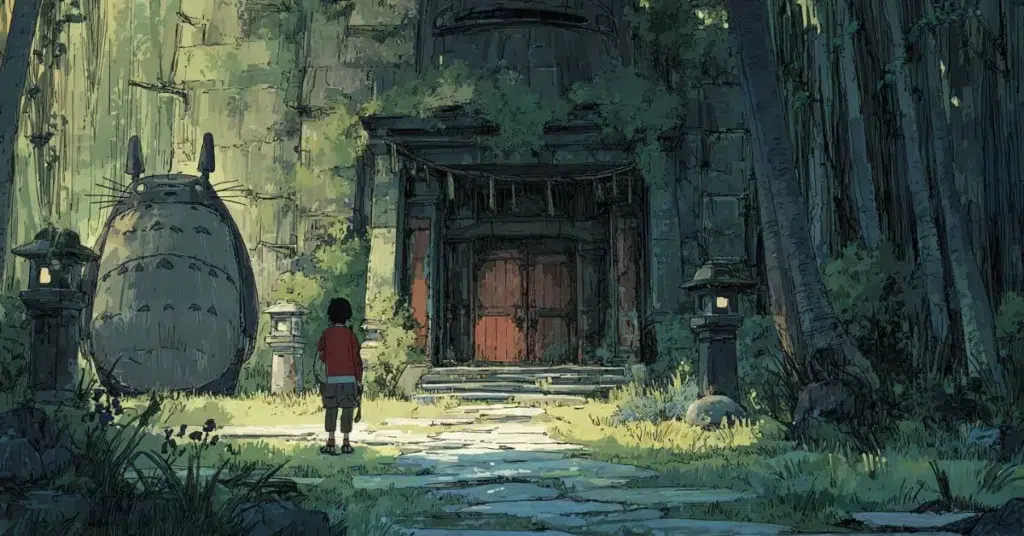
My son watched Spirited Away at age 7. The scene where Chihiro’s parents turn into pigs kept him up that night. He was fine by morning, but I wished someone had warned me about that specific moment.
That experience is why this guide exists. Not a generic list of MPAA ratings you could find on IMDb. Specific scene-by-scene warnings from a parent who has sat through all of these with his kids. What actually scares younger children, what themes fly over their heads, and what sparks a conversation worth having.
Studio Ghibli has made 25 films since 1984. Some are perfect for toddlers. Others will make adults cry. A few have violence that catches parents off guard because the art style looks so gentle.
Here is every Ghibli film sorted by the age I would let my own kids watch it.
Quick age reference table
Use this as a cheat sheet. Detailed breakdowns with specific warnings follow below.
| Film | Year | Director | Our Rating | MPAA |
|---|---|---|---|---|
| My Neighbor Totoro | 1988 | Miyazaki | Ages 3+ | G |
| Ponyo | 2008 | Miyazaki | Ages 3+ | G |
| Kiki’s Delivery Service | 1989 | Miyazaki | Ages 3+ | G |
| My Neighbors the Yamadas | 1999 | Takahata | Ages 3+ | G |
| The Cat Returns | 2002 | Morita | Ages 3+ | G |
| Arrietty | 2010 | Yonebayashi | Ages 3+ | G |
| Castle in the Sky | 1986 | Miyazaki | Ages 6+ | PG |
| Spirited Away | 2001 | Miyazaki | Ages 6+ | PG |
| Howl’s Moving Castle | 2004 | Miyazaki | Ages 6+ | PG |
| Earwig and the Witch | 2020 | G. Miyazaki | Ages 6+ | PG |
| Nausicaa of the Valley of the Wind | 1984 | Miyazaki | Ages 9+ | PG |
| Porco Rosso | 1992 | Miyazaki | Ages 9+ | PG |
| Pom Poko | 1994 | Takahata | Ages 9+ | PG |
| Whisper of the Heart | 1995 | Kondo | Ages 9+ | G |
| The Boy and the Heron | 2023 | Miyazaki | Ages 9+ | PG-13 |
| The Tale of the Princess Kaguya | 2013 | Takahata | Ages 9+ | PG |
| The Red Turtle | 2016 | de Wit | Ages 9+ | PG |
| From Up on Poppy Hill | 2011 | G. Miyazaki | Ages 9+ | PG |
| Princess Mononoke | 1997 | Miyazaki | Ages 13+ | PG-13 |
| Tales from Earthsea | 2006 | G. Miyazaki | Ages 13+ | PG-13 |
| Only Yesterday | 1991 | Takahata | Ages 13+ | PG |
| Ocean Waves | 1993 | Tomomi | Ages 13+ | PG |
| The Wind Rises | 2013 | Miyazaki | Ages 13+ | PG-13 |
| When Marnie Was There | 2014 | Yonebayashi | Ages 13+ | PG |
| Grave of the Fireflies | 1988 | Takahata | Skip | Not Rated |
Best for little kids (ages 3+)
These are the films you can put on without previewing first. Gentle pacing, warm stories, nothing that will wake anyone up at 2am.
My Neighbor Totoro (1988)
The universal starter Ghibli film. Two sisters move to the countryside and discover forest spirits. The biggest creature looks like a friendly bear crossed with an owl. No villain. No fighting. Just wonder.
What parents should know: The girls’ mother is in the hospital with an unspecified illness. It is handled gently, but kids who have a parent or grandparent dealing with health issues may have questions. The younger sister goes missing briefly near the end, which creates some tension.
If your kid is sensitive to: Parental illness themes, skip ahead to Ponyo instead as a first pick.
Ponyo (2008)
A goldfish princess wants to become human after befriending a 5-year-old boy. Miyazaki made this for actual toddlers and it shows. The colors are bright, the story is simple, and the emotional weight is light.
What parents should know: A tsunami-like storm sequence is visually intense but never feels threatening. Think big waves, not disaster movie. Ponyo’s father looks a bit odd but is harmless.
If your kid is sensitive to: Large water or storm scenes, this one has a 5-minute stretch that might be too much. Otherwise, this is probably the safest Ghibli film for very young kids.
Kiki’s Delivery Service (1989)
A 13-year-old witch moves to a new city alone to start her training year. She starts a delivery service using her broomstick. It is basically a coming-of-age story wrapped in a gentle adventure.
What parents should know: Kiki loses her flying ability mid-film, which triggers a depressive episode. It is handled tastefully but younger viewers may not understand why she is suddenly sad. A friend gets caught dangling from a blimp near the end.
If your kid is sensitive to: Themes of loneliness or characters being sad, be ready to talk through the middle section. The ending is uplifting.
Arrietty (2010)
Tiny people live under the floorboards of a house, borrowing supplies from the humans above. Arrietty is 14 and the first human she meets is a sick boy staying at the house. Quiet, beautiful, and low stakes.
What parents should know: The concept of being tiny and vulnerable to cats, bugs, and humans could unsettle very anxious children. One adult character tries to capture the tiny family. The sick boy’s condition is never fully explained.
If your kid is sensitive to: Small creatures in danger, there are a few tense moments. Nothing violent.
The Cat Returns (2002)
A high school girl saves a cat from a truck and gets pulled into the Cat Kingdom as a thank you. Light, funny, fast-paced. Probably the most normal cartoon feeling Ghibli film.
What parents should know: Almost nothing to flag. The Cat King is a bit pushy about marrying the protagonist to his son, which is played for comedy. Some mild chase sequences.
My Neighbors the Yamadas (1999)
A family comedy told in short vignettes. Watercolor art style. The family argues, makes up, deals with everyday life. No plot, just slices of a Japanese family being a family.
What parents should know: This one might bore younger kids because of its loose structure. No violence, no danger, no tension. The biggest risk is they wander off to do something else.
First adventures (ages 6+)
These films introduce real conflict and some genuinely tense moments. Nothing graphic, but kids under 6 might find parts confusing or unsettling. My kids watched most of these between ages 6 and 8 without issues.
Spirited Away (2001)
The one that wins every “best animated film” list. A 10-year-old girl stumbles into a spirit world and must work in a bathhouse to free her parents, who have been turned into pigs. It is beautiful, strange, and dense with Japanese mythology.
What parents should know: The parents-to-pigs transformation is the big one. It happens fast and is played for horror. No-Face, a spirit who starts quiet and becomes aggressive, swallows people whole (they survive). A river spirit covered in sludge looks gross. The witch Yubaba is intimidating but not evil in a simple way.
If your kid is sensitive to: Body horror or transformation scenes, wait until 8+. The pig scene is the most commonly reported “my kid cried” moment in all of Ghibli.
Castle in the Sky (1986)
A boy and girl search for a floating city while being chased by both pirates and the military. Classic adventure story with a lot of action. Feels like an animated Indiana Jones at times.
What parents should know: Military soldiers fire guns. Robots destroy things. A villain threatens children. It is all PG-level action but there is more of it than in the 3+ films. The emotional stakes are real. One scene involves a mining town attacked by military forces.
If your kid is sensitive to: Guns, military aggression, or characters in real danger, this might be better at 7-8. The action sequences are fast and loud.
Howl’s Moving Castle (2004)
A young woman is cursed to look like a 90-year-old and moves into a wizard’s walking castle to break the spell. War rages in the background. The wizard Howl is dramatic and vain, which kids find funny.
What parents should know: War is a constant background presence. Bombers fly over cities. The Witch of the Waste is unsettling. Howl transforms into a bird-like creature during battle, which is intense. Sophie’s aging curse means she looks elderly for most of the film, which confuses some younger viewers.
If your kid is sensitive to: War imagery (bombs, fire, military attacks), save this for 8+. The war elements are atmospheric rather than graphic, but they are persistent.
Earwig and the Witch (2020)
An orphan girl is adopted by a witch and learns to navigate her new household. Ghibli’s first CGI film. Shorter and simpler than most Ghibli movies.
What parents should know: The witch Bella Yaga is unkind and uses Earwig as a servant. It is closer to Roald Dahl than fairy tale horror. The CGI style is divisive (it looks different from every other Ghibli film). Some parents and kids feel this one is just okay, which is a first for the studio.
If your kid is sensitive to: Mean adults, there is a stretch where Earwig is mistreated. She handles it with attitude rather than tears, which most kids respond well to.
Complex stories (ages 9+)
Now we are into films where the themes require some life experience to process. Environmental destruction, artistic ambition, identity, loss. My 13-year-old connects with these on a level my 11-year-old does not always reach.
Nausicaa of the Valley of the Wind (1984)
Set in a post-apocalyptic world where toxic jungles and giant insects threaten humanity. A princess tries to prevent war between kingdoms while understanding the ecology that everyone else fears. Miyazaki made this before Ghibli technically existed.
What parents should know: Large insects (Ohmu) charge at humans. Soldiers die in battle. Nausicaa gets injured and bleeds. Environmental destruction is a heavy theme. The violence is not graphic but it is present and consequential.
If your kid is sensitive to: Giant bugs. Seriously. The Ohmu are the size of buildings and swarm when angry. If your kid handles bugs fine, the rest of the film is manageable.
Porco Rosso (1992)
A World War I fighter pilot has been cursed to look like a pig. He works as a bounty hunter chasing air pirates in 1930s Italy. Funny, laid-back, and surprisingly grown-up in its themes.
What parents should know: Aerial dogfights with gunfire. Nothing bloody, but planes get shot down. The themes of war disillusionment, aging, and romantic regret will bore younger kids completely. My 11-year-old found it slow. My 13-year-old thought it was cool.
If your kid is sensitive to: Nothing here is scary. The risk is boredom. This is more of a grown-up film wearing a kid-friendly disguise.
Pom Poko (1994)
Raccoon dogs (tanuki) fight suburban development destroying their forest. They use shape-shifting powers to scare humans away. This is the weird one.
What parents should know: The tanuki use their, let us say, anatomical features as weapons and tools. This is a real part of Japanese folklore but it catches Western parents completely off guard. Some tanuki die. The environmental message is blunt and sad. Several scenes show the tanuki in despair as their homes are bulldozed.
If your kid is sensitive to: Animal death or habitat destruction, this hits hard. It is also one where you might want to preview it yourself first so you can field the anatomy questions.
Whisper of the Heart (1995)
A teenage girl who loves reading discovers that the same boy keeps checking out books before her at the library. A romance and a story about finding creative ambition. No magic, no fantasy (mostly).
What parents should know: This is essentially a slice-of-life teen romance. Zero violence, zero danger. The reason it is at 9+ is simply that younger kids will not connect with themes of artistic self-doubt and first love. My 13-year-old genuinely loved this one. My 11-year-old checked out after 20 minutes.
The Boy and the Heron (2023)
Miyazaki’s most recent film. A boy grieving his mother follows a mysterious heron into a fantastical tower world. Deeply personal, deliberately strange, and not easy to summarize.
What parents should know: A parent dies in a fire in the opening minutes. The boy injures himself deliberately (hits his own head with a rock). Fantasy creatures can be unsettling. The plot is intentionally surreal and may frustrate kids who want a clear story. The PG-13 rating is earned.
If your kid is sensitive to: Parental death, self-harm (even mild), or confusing narratives, wait until they are older. This is Miyazaki processing his own legacy and it shows.
The Tale of the Princess Kaguya (2013)
A tiny girl found inside a bamboo stalk grows into a princess. Based on a 10th-century Japanese folk tale. The watercolor animation is stunning. The ending is devastating.
What parents should know: The sadness here is existential, not violent. Kaguya must leave everyone she loves. Younger kids will not feel the weight of it, which is fine. Older kids and adults will cry.
If your kid is sensitive to: Loss and separation, the final 20 minutes are emotionally intense. But there is no violence, no scares, nothing dark in a conventional sense.
The Red Turtle (2016)
A man is shipwrecked on a deserted island. No dialogue. A red turtle keeps destroying his raft. Lyrical, slow, and meditative.
What parents should know: This is a co-production, not a traditional Ghibli film. No spoken words at all. Kids who need plot and dialogue will be bored. Kids who are patient will find it beautiful. Themes of life, death, and the passage of time are handled symbolically.
From Up on Poppy Hill (2011)
Set in 1963 Yokohama, a teenage girl and boy work to save their school clubhouse from demolition. Then they discover they might be siblings. Directed by Goro Miyazaki (Hayao’s son).
What parents should know: The potential-sibling romance is the main concern. It is resolved, but the tension while it lasts makes younger kids uncomfortable (and older kids fascinated). Post-war Japan setting requires some context. No action, no fantasy elements.
Mature themes (ages 13+)
These films deal with violence, war, romance, and complex moral questions that require teenage maturity. Some of these are among Ghibli’s best work.
Princess Mononoke (1997)
A prince cursed by a demon god travels to find a cure and gets caught in a war between industrialists and forest spirits. This is Miyazaki’s masterpiece for older audiences. It is also where most parents make their biggest Ghibli mistake.
What parents should know: Arms get shot off with arrows. Heads are cut off by swords. A boar god rots alive on screen. The violence is not constant but when it happens, it is graphic by animation standards. The environmental themes are genuinely complex (neither side is purely right or wrong). This is the film parents most often show too early because “it is animated.”
If your kid is sensitive to: Graphic violence, body horror, or disturbing imagery, this is not for them yet. 13 is my floor. Some kids are ready at 12, very few before that.
Tales from Earthsea (2006)
A prince kills his father and flees into a world of failing magic. Based loosely on Ursula K. Le Guin’s books. Directed by Goro Miyazaki. The weakest Ghibli film by most rankings, but it has its moments.
What parents should know: Patricide in the opening scene. Slavery is depicted. A villain is genuinely menacing. The tone is darker than most Ghibli films throughout. The pacing is uneven and the story is hard to follow if you have not read the books.
Only Yesterday (1991)
A 27-year-old woman takes a trip to the countryside and reflects on her childhood. Alternates between her adult life and memories of being 10. One of Takahata’s quietest, most human films.
What parents should know: A scene where the girls discuss menstruation embarrasses the boys in the class. The adult romance is subtle. Nothing inappropriate, but kids under 13 will find this boring. It is a film about nostalgia, which requires having some.
Ocean Waves (1993)
A made-for-TV film about a high school love triangle. A transfer student from Tokyo disrupts friendships in a rural town. Simple, grounded, no fantasy.
What parents should know: Teen romance, mild jealousy, a slap. Nothing intense. The 13+ rating is less about content and more about the fact that younger kids will have zero interest in high school relationship drama.
The Wind Rises (2013)
A fictionalized biography of the man who designed Japan’s World War II fighter planes. Miyazaki’s most controversial film. Beautiful and morally complicated.
What parents should know: The protagonist designs war machines. The film does not glorify war but it does not shy away from the moral complexity either. His wife has tuberculosis and her decline is shown with quiet realism. The Great Kanto Earthquake sequence is intense. Heavy smoking throughout (historically accurate).
If your kid is sensitive to: Illness leading to death, the tuberculosis storyline is heartbreaking. The war engineering angle requires maturity to process without simple “good vs evil” framing.
When Marnie Was There (2014)
A lonely girl sent to the countryside befriends a mysterious girl in an abandoned mansion. Is Marnie real? A ghost? A memory? The answer is genuinely moving.
What parents should know: Themes of abandonment, adoption, depression, and identity. The protagonist actively pushes people away and calls herself worthless. Some viewers read the central relationship as romantic (it is not, but the ambiguity is there). The emotional weight is significant.
If your kid is sensitive to: Abandonment, self-worth issues, or depression, this one hits close. It is therapeutic for some kids and triggering for others.
One to skip for family viewing
Grave of the Fireflies (1988)
I need to be direct about this one. Grave of the Fireflies is not a film I would watch with my kids. It is arguably the greatest anti-war film ever animated. It is also one of the most emotionally devastating movies in any medium.
Two children, a teenager and his little sister, try to survive in Japan after the firebombing of Kobe in 1945. They fail. You know from the opening scene that they die. The film is about watching it happen.
What parents should know: A child starves to death on screen. Burns, corpses, and firebombing are shown. The sister is around 4 years old. Her slow decline is the core of the film. I have watched it once. I will not watch it again.
This is not a “when they are old enough” recommendation. Some adults are not ready for this film. If your teenager specifically asks to see it, let them, but sit nearby. Not for discussion. Just so they know you are there.
Where to watch Studio Ghibli
Streaming availability for Ghibli has been a mess for years. Here is where things stand in 2026.
Max (HBO): Has the complete Ghibli library in the US. This is the easiest option if you already subscribe. Both dubbed and subtitled versions available for most films.
Netflix: Has the Ghibli catalog in most countries outside the US and Japan. If you are in Canada, the UK, Australia, or most of Europe, Netflix is your best bet.
GKids / Physical media: GKids distributes Ghibli films on Blu-ray and DVD in North America. If you want to own them (and not worry about streaming rights changing), the GKids releases are excellent quality with both dub and sub options.
Digital purchase: Most Ghibli films are available for individual purchase on Apple TV, Amazon Prime Video, and Vudu. Prices typically run $15-20 per film for HD.
One note on dubs vs subs: the English dubs for Ghibli films are generally high quality. Disney handled earlier dubs and GKids handles newer ones. For kids under 8 who cannot read subtitles fast enough, the dub is the way to go. My kids switched to subtitles around age 10 once their reading speed caught up.
What’s next
If your kid connects with Ghibli, anime television is the natural next step. Our Anime Finder lets you pick your kid’s age and interests to get a filtered list of parent-reviewed shows.
For a broader overview of anime series worth watching as a family, the Dad’s Guide to Anime Shows to Watch With Your Kids covers 40+ shows with the same kind of age-specific guidance you found here.
And if your younger kids are not ready for anime yet, our age-specific book guides (3-year-olds, 5-year-olds) give the same honest, tested recommendations for picture books and early readers.
Not sure which anime series to try after Ghibli? Our Cartoon-to-Anime guide maps Western cartoons your kid already loves to anime they will enjoy.
Need help picking a streaming service? Our Parent’s Guide to Anime Streaming Services covers parental controls and pricing for every major platform.
Ready for longer series? The Big Three Anime Parent Guide covers Naruto, One Piece, and Bleach with full content warnings.
Browse all our anime and manga guides on the Anime and Manga hub.

About These Recommendations
I’m George. I read to my kids for 10+ years before they started reading on their own. My wife’s a therapist who helped pick books that actually matter for development. Everything on this site got tested on our family first.
My Neighbor Totoro and Ponyo are the safest picks for very young children (ages 3+). Both have G ratings, no villains, and gentle pacing. Ponyo is slightly easier for toddlers because the story is simpler. Totoro is the better film overall but has a brief subplot about the mother being ill, which may prompt questions.
For most 5-year-olds, yes. The scene where Chihiro’s parents transform into pigs is the most commonly reported “my child was upset” moment across all Ghibli films. No-Face becoming aggressive and the witch Yubaba add to the intensity. I recommend waiting until age 6-7, or 8 if your child is particularly sensitive to transformation scenes or characters in peril.
There is no required viewing order since Ghibli films are standalone stories with no shared universe. I recommend starting with your child’s age tier from this guide (Totoro or Ponyo for young kids, Spirited Away for ages 6+) and then exploring based on which themes interest them. Watching chronologically is fun for adults but unnecessary for kids.
In the US, Studio Ghibli films stream on Max (HBO), not Netflix. Netflix carries the complete Ghibli library in most other countries including Canada, the UK, and Australia. For US viewers, Max is the most complete streaming option for Ghibli. Films are also available for individual purchase on Apple TV, Amazon Prime Video, and Vudu.
Princess Mononoke has the most graphic violence (severed limbs, decapitation, a god rotting alive). Nausicaa has battle scenes with insect swarms and injuries. Castle in the Sky features military gunfire and robot destruction. Tales from Earthsea opens with a patricide and includes slavery. The 3+ and 6+ tier films in this guide have no meaningful violence.
I would wait until 13. Princess Mononoke contains graphic violence including arms being shot off, heads cut off with swords, and a boar god decomposing on screen. The environmental and moral themes are also genuinely complex. This is the film parents most often show too young because “it is animated.” The PG-13 rating is well-earned.
Grave of the Fireflies is by far the saddest, depicting two children dying during World War II. I do not recommend it for family viewing at any age. The Tale of the Princess Kaguya, When Marnie Was There, and The Wind Rises are also emotionally heavy. Kiki’s Delivery Service and Whisper of the Heart have lighter sad moments that resolve positively.
No. Grave of the Fireflies shows a 4-year-old child starving to death during wartime. Burns, corpses, and firebombing are depicted. It is widely considered one of the greatest anti-war films ever made, but it is emotionally devastating for adults, let alone children. If your teenager specifically requests to watch it, let them, but be available afterward.