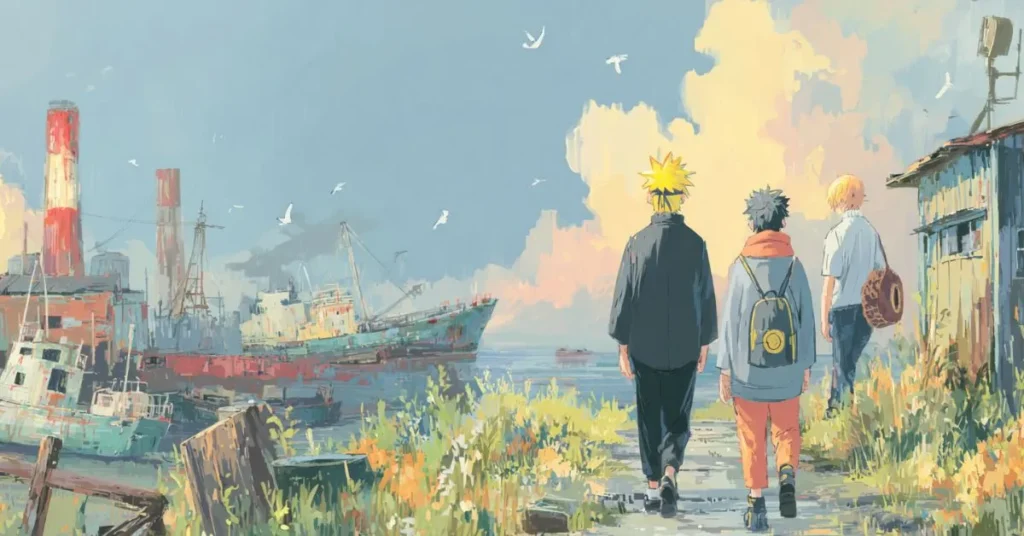
My 13-year-old came home from school and told me his friend had been talking about Naruto for weeks. He wanted to watch it. I said sure, pulled it up, and then saw the episode count. 720 episodes. That is not a show. That is a lifestyle commitment.
Then I started reading about the content. Some sites say TV-PG. Others say TV-14. A few mention “fan service” without explaining what that actually means for a parent deciding whether to hit play. I had no idea if my kid was about to watch cartoon ninjas throw stars or something closer to Game of Thrones with headbands.
That was two years ago. Since then, my kids and I have watched significant chunks of all three “Big Three” anime (Naruto, One Piece, and Bleach) and read the manga for each. This guide is everything I wish someone had told me before we started. Not generic age ratings. Specific content breakdowns, the real episode counts you need to know, which filler to skip, and whether the manga is a better option for your family.
Quick comparison for parents
The “Big Three” refers to Naruto, One Piece, and Bleach. These three manga series ran simultaneously in Japan’s Weekly Shonen Jump magazine during the 2000s and became the most popular anime series of their generation. They are to anime what Harry Potter, Lord of the Rings, and Star Wars are to Western pop culture. If your kid is getting into anime, chances are one of these will come up first.
Here is a side-by-side comparison to help you decide where to start.
| Show | Our Age Rating | Episodes | Violence Level | Fan Service | Positive Themes | Best For |
|---|---|---|---|---|---|---|
| Naruto | 12+ | 720 (220+500) | Moderate | Low-Moderate | Perseverance, friendship | Kids who like underdogs |
| One Piece | 13+ | 1,100+ | Moderate | Moderate | Found family, adventure | Kids who love epic journeys |
| Bleach | 14+ | 418 (366+52) | High | Low | Duty, protecting others | Teens who want darker action |
Those episode counts are not typos. The time commitment is the single biggest barrier for families, and I will break down how to handle it for each show.
A parent’s guide to Naruto
What it is about
Naruto Uzumaki is an orphan and outcast in a village of ninjas. A powerful fox demon was sealed inside him as a baby, and the entire village shuns him for it. His dream is to become Hokage (the village leader) so people will finally respect him. The series follows him from a loud, lonely 12-year-old to a young man who earns that respect through sheer refusal to give up.
It is an underdog story at its core. If your kid has ever felt like the weird one at school, Naruto will resonate.
Age rating and content warnings
Naruto is split into two series. Part 1 (episodes 1-220) covers Naruto as a kid and carries a TV-PG rating. Naruto Shippuden (episodes 221-720) picks up when he is a teenager and is rated TV-14.
Here is what you should actually know as a parent:
Violence: Part 1 has cartoon-style fighting similar to Avatar: The Last Airbender. Characters punch, kick, and throw weapons, but the consequences are mostly bruises and exhaustion. Shippuden escalates. Characters die. Battles involve real injuries. One arc depicts full-scale war with casualties.
Sexual content: Naruto has a technique called “Sexy Jutsu” where he transforms into a naked woman (strategically covered) to distract opponents. It is played for comedy and used sparingly. The character Jiraiya is openly described as a pervert who peeks at women bathing. This running joke is the most consistent mature content in the series.
Heavy themes: Loneliness, parental loss, the cycle of hatred, child soldiers (the ninja system is essentially this), war, and revenge. The show handles these themes with surprising depth. Some villain backstories are genuinely heartbreaking.
Positive themes
This is where Naruto earns its place in the conversation. The series is fundamentally about never giving up on people. Naruto’s defining trait is that he believes anyone can be redeemed. He befriends former enemies, changes minds through persistence rather than power, and earns respect the hard way.
Friendship, loyalty, overcoming prejudice, and the idea that your circumstances do not define your future. These themes land with kids because they are delivered through action and character rather than lectures.
The episode count problem
720 total episodes. That number scares every parent, and it should. But here is the thing most guides do not tell you: about 40% of those episodes are filler.
Filler episodes are stories the anime studio invented to fill time while the manga creator wrote more material. They are not part of the real story. Some are decent. Most are skippable. Using a filler guide (easy to find online), you can watch the core Naruto story in roughly 430 episodes. Still a lot, but manageable over a year or two.
My recommendation: start with Part 1 episodes 1-135 (the core story before filler takes over). If your kid is hooked by then, commit to Shippuden with a filler guide.
Where to watch
Crunchyroll has both Naruto and Naruto Shippuden in full (subbed and dubbed). Hulu has Part 1. Netflix carries some episodes depending on your region. For the complete experience, Crunchyroll is the most reliable option.
The manga alternative
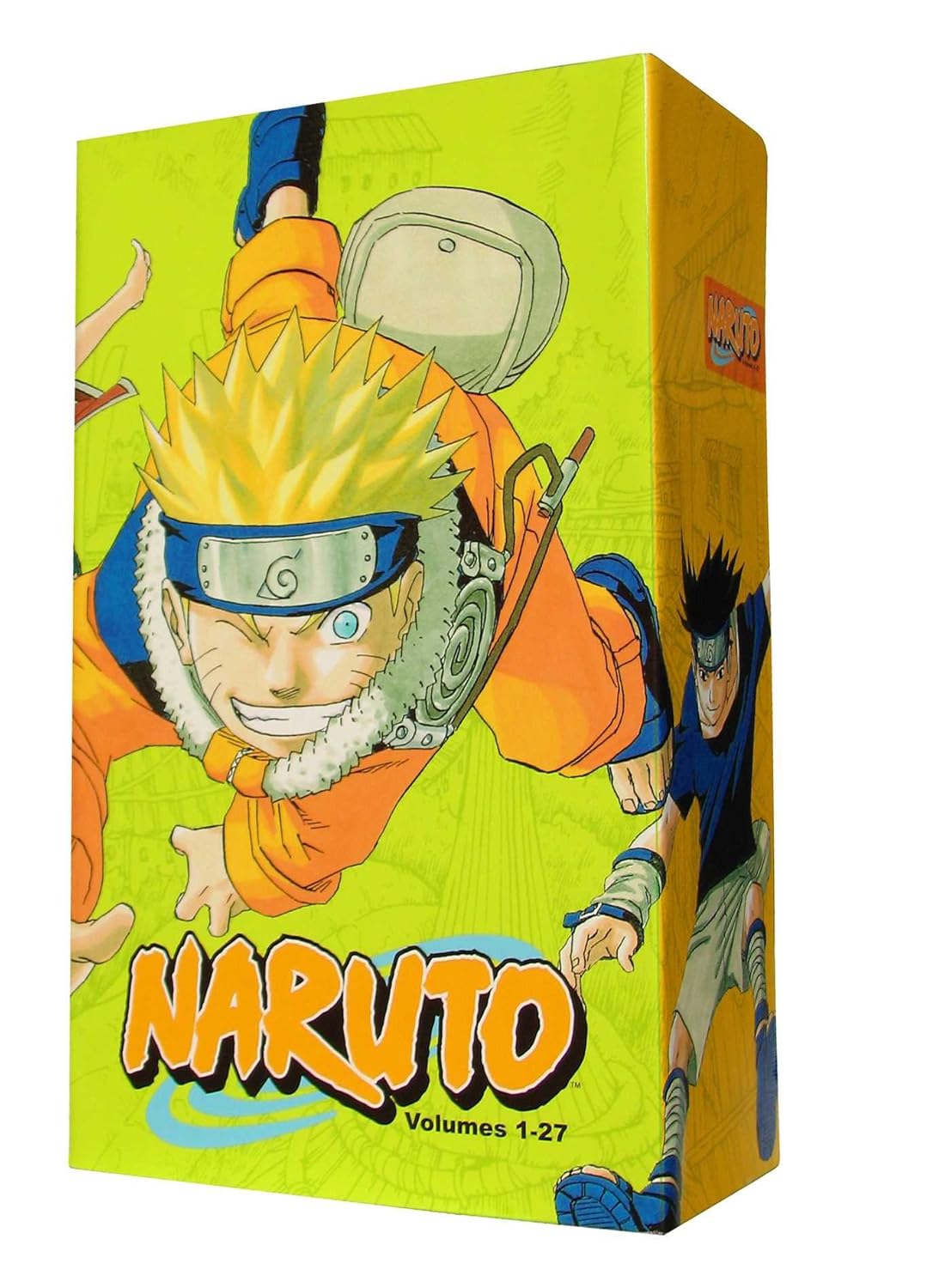
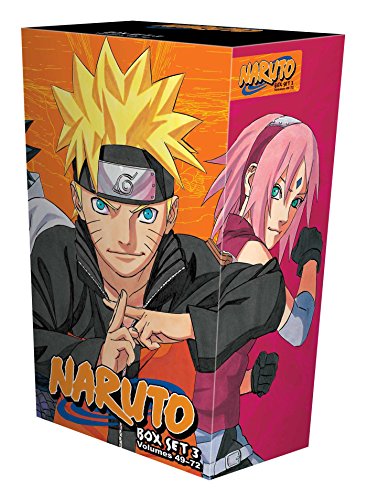
If 720 episodes sounds insane, the manga tells the same story in 72 volumes with zero filler. Every chapter is part of the real story. My 13-year-old read through the first box set in about two weeks, which covered roughly the same ground as 135 anime episodes, minus the filler and padding.
The manga is written and drawn by Masashi Kishimoto. His art starts rough in volume 1 and becomes genuinely impressive by the later volumes. The action is clearer on the page than it sometimes is in the anime, where budget episodes can look choppy.
A parent’s guide to One Piece
What it is about
Monkey D. Luffy is a teenage boy whose body stretches like rubber after eating a magical fruit. His goal is to find the legendary One Piece treasure and become King of the Pirates. Along the way, he assembles a crew of misfits, each with their own dreams, and sails through a world of bizarre islands, corrupt governments, and powerful enemies.
That description sounds silly. It is, at first. But One Piece is also the best-selling manga in history for a reason. Beneath the goofy surface is a story about loyalty, found family, and standing up to systems that hurt people.
Age rating and content warnings
One Piece is rated TV-14 for most of its run. Here is the real breakdown.
Violence: Fights are frequent but stylized. Luffy punches people across rooms. Swords clash. Ships get destroyed. For the first few hundred episodes, the violence feels cartoonish and consequences are light. Later arcs (particularly Marineford and Wano) raise the stakes with character deaths, war sequences, and more intense combat. Blood appears but it is not graphic.
Sexual content: This is where One Piece gets the most parent criticism. Creator Eiichiro Oda draws female characters with increasingly exaggerated body proportions, especially after a major time skip around episode 517. Nami and Robin (two main characters) are drawn in revealing outfits. The character Sanji nosebleeds around attractive women as a running joke. There are no sex scenes, but the visual design is clearly aimed at an older audience in places.
Heavy themes: One Piece tackles slavery, racism, government corruption, genocide, and the erasure of history. These are not side plots. Entire arcs revolve around oppressed populations fighting for freedom. The Fishman Island arc is explicitly about racial prejudice. The World Government is portrayed as corrupt to its core. These themes are handled with surprising sophistication, but they are heavy.
Positive themes
Found family is the heart of One Piece. Luffy’s crew, the Straw Hats, are people who had nowhere else to belong. The series argues again and again that the family you choose matters as much as the one you are born into.
Freedom, loyalty, standing up to authority when authority is wrong, pursuing your dreams even when people laugh at you. One Piece is deeply optimistic about human nature, even when it shows humanity at its worst.
The episode count problem
Over 1,100 episodes and still running. This is the single biggest reason parents hesitate, and honestly, it is a valid concern. One Piece is a genuine commitment.
The anime also has a pacing problem. To avoid catching up to the manga, the anime studio stretches scenes. A single manga chapter that takes 5 minutes to read can become a 20-minute episode with long reaction shots and recaps. This is not filler exactly (it follows the manga plot), but it feels padded.
Options for managing the length:
One Pace: A fan-edited version that cuts the padding and stays faithful to the manga pacing. It trims the anime significantly. Not officially endorsed but widely used by the community.
Manga first: Reading the manga at your own pace is how most Japanese fans experience One Piece. The pacing is much tighter. At 100+ volumes, it is still a big read, but you control the speed.
The Netflix live-action: Covers the first saga (about 45 anime episodes) in 8 live-action episodes. A legitimate starting point if your kid wants to test the waters.
My recommendation: try the first 44 anime episodes (the East Blue saga) or watch the Netflix live-action. If your kid connects with the crew by the Arlong Park arc, they are in for the long haul.
Where to watch
Crunchyroll has the complete anime (subbed and dubbed). Netflix has the live-action adaptation and some anime episodes. Funimation’s library has been folded into Crunchyroll in most regions.
The manga alternative
The manga is how most Japanese readers experience One Piece, and creator Eiichiro Oda’s artwork is genuinely incredible. Detailed world-building, expressive characters, and action sequences that work better on the page than in the sometimes-padded anime. You can read at your own pace, skip nothing (there is no filler), and the physical volumes look fantastic on a shelf.
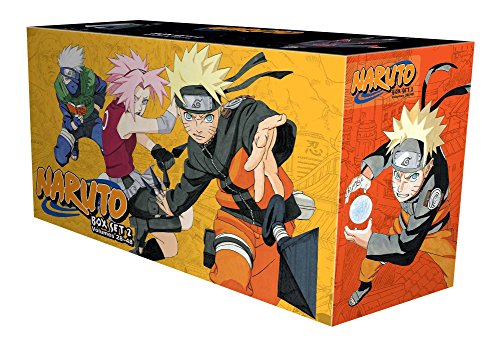
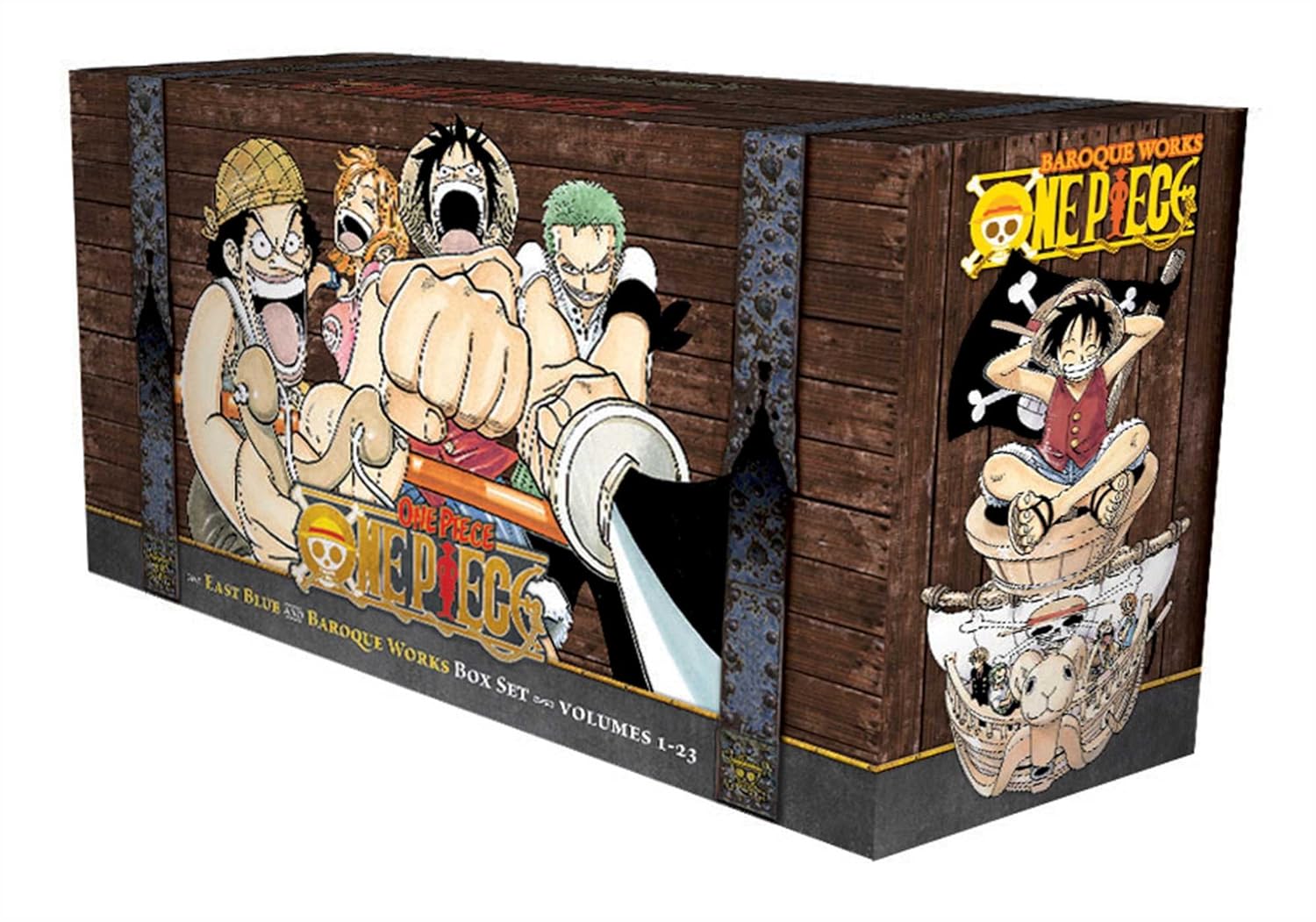
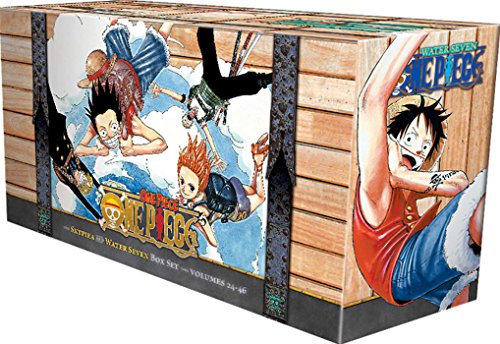
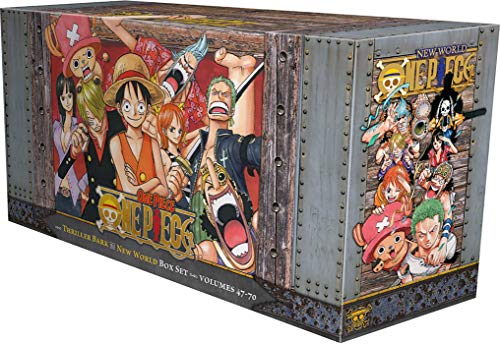
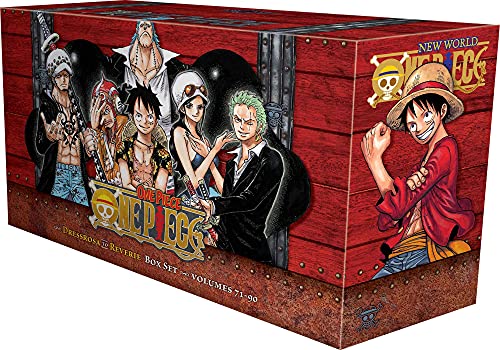
One Piece has the most box sets of the Big Three because the series is the longest. Four sets covering volumes 1 through 90, with the story continuing beyond that in individual volumes.
A parent’s guide to Bleach
What it is about
Ichigo Kurosaki is a 15-year-old high school student who can see ghosts. After a chance encounter with a Soul Reaper (a spirit warrior), he gains her powers and takes on the job of fighting Hollows, which are corrupted spirits that prey on the living. He wields a sword roughly the size of a surfboard.
Bleach is the coolest-looking of the Big Three. Creator Tite Kubo is a designer first and a storyteller second. The characters dress well, fight with style, and look like they belong on album covers. If your teenager gravitates toward aesthetics, Bleach is the one that will hook them visually.
Age rating and content warnings
Bleach is rated TV-14 but it runs harder than Naruto or One Piece. The newer Thousand-Year Blood War (TYBW) series pushes even further.
Violence: Sword fights are the primary combat style, and they come with blood. Characters get slashed, stabbed, and impaled. The original series (episodes 1-366) keeps it within TV-14 bounds, though it is consistently at the upper end. The TYBW anime (2022-2025, 52 episodes) is the most violent Bleach content, with graphic injuries and higher stakes.
Horror elements: Hollows are monstrous creatures with skull-like masks and distorted bodies. Some are designed to be frightening. The atmosphere in Bleach is darker than the other Big Three, closer to a supernatural action thriller than an adventure show. The Hueco Mundo arc leans heavily into horror-adjacent visuals.
Sexual content: Minimal compared to One Piece. Some female characters have exaggerated designs, and one character (Yoruichi) has a running joke involving transformation and nudity, but it is brief and infrequent. Bleach is the least fan-service-heavy of the Big Three.
Heavy themes: Death, duty, sacrifice, the moral ambiguity of authority. Soul Society (the afterlife’s governing body) is shown to be deeply corrupt. Characters make sacrifices that stick. The tone is more serious than Naruto or One Piece from the start.
Positive themes
Bleach is fundamentally about protecting the people you care about. Ichigo’s motivation is simple and consistent: he fights because people he loves are in danger. Not for a dream, not for a title. Just to keep his friends and family safe.
Duty, sacrifice, loyalty, and the idea that power means nothing if you do not use it to help others. The themes are more straightforward than the other two series, which makes them easy for teenagers to connect with.
The episode count problem
366 original episodes plus 52 episodes of Thousand-Year Blood War. That is 418 total, making Bleach the most manageable of the Big Three by a significant margin.
The catch: the original anime has roughly 45% filler content. That is almost half the show. Bleach’s filler arcs are notoriously long (one runs for 40+ episodes straight) and widely considered the weakest filler in the Big Three. A filler guide is not optional here. It is essential.
With a filler guide, the original series drops to about 200 canon episodes. Add the 52 TYBW episodes and you are looking at roughly 250 episodes of actual story. Very doable.
My recommendation: watch with a filler guide from episode 1. The Soul Society arc (episodes 21-63) is where most viewers get hooked. If your teen is not invested by the end of that arc, Bleach is not for them.
Where to watch
Hulu has the original Bleach anime (366 episodes, subbed and dubbed). Disney+ carries the Thousand-Year Blood War series in some regions. Crunchyroll has TYBW in others. Check your specific region, as the streaming rights for TYBW are split. The original English dub is excellent, widely considered one of the best anime dubs of its era.
The manga alternative
Bleach’s manga is the cleanest reading experience of the Big Three. 74 volumes, zero filler, and Tite Kubo’s art style is arguably the best-looking of any shonen manga. His panel layouts are dramatic, his character designs are sharp, and his fight scenes have a visual rhythm that the anime sometimes struggles to match.
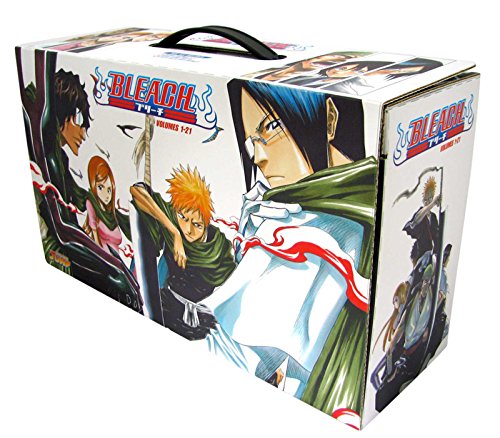
The manga also moves fast. Kubo was known for sparse dialogue and bold visuals, which means volumes go by quickly. My kids read through a Bleach box set faster than the equivalent Naruto or One Piece sets.


Which should your kid watch first?
All three are worth watching eventually. But the starting point matters because the first Big Three anime your kid connects with tends to become their favorite. Here is how to pick.
Start with Naruto if:
Your kid is 12 or older. They relate to feeling like an outsider or an underdog. They like stories where the main character earns everything through hard work rather than natural talent. They can handle some crude humor (the Sexy Jutsu and Jiraiya content). They want a story that starts lighter and gradually gets more serious.
Naruto is the most accessible starting point. Part 1 eases kids in gently, and by the time Shippuden gets heavy, your kid is invested enough to handle it.
Start with One Piece if:
Your kid is 13 or older. They love adventure and exploration. They have the patience for a long journey (this is not a sprint, it is a marathon). They value stories about friendship and loyalty above all else. They can handle exaggerated character designs and visual fan service.
One Piece rewards patience more than any other anime. The early episodes are fun but simple. The payoffs come hundreds of episodes later, and they are enormous. Kids who stick with it tend to rank it as their favorite piece of fiction, period.
Start with Bleach if:
Your kid is 14 or older. They want something that looks and feels cooler than the other two. They like sword fights, supernatural themes, and darker atmospheres. They can handle horror-adjacent creature designs and blood in combat. They prefer a more contained story (Bleach is the shortest).
Bleach is the edgiest of the Big Three. Teenagers who find Naruto too childish or One Piece too goofy often gravitate here. It gets to the action faster and keeps a more consistent tone.
What worked for us
My kids started with Naruto, and I think it was the right call. My son was 11 when he began Part 1, and the themes of perseverance and being underestimated hit him at the right time. The pacing of Part 1 gave him time to get invested without being overwhelmed.
They moved to One Piece about a year later. My 13-year-old is now deeper into it than I am and keeps telling me I need to catch up. My 11-year-old watched the first 100 episodes, took a break, and came back to it. One Piece does not demand you binge it. It is comfortable being a slow burn.
We watched some Bleach together more recently. Both kids thought it looked incredible. My 13-year-old finished the Soul Society arc and immediately wanted more. My 11-year-old found the Hollows a bit creepy and decided to come back to it later. That felt about right.
The manga alternative
If the episode counts are scaring you (and they should), manga box sets are a genuinely great option for families.
No filler. Every chapter in the manga is part of the real story. No padding, no invented arcs, no stretched-out reaction shots. The manga for all three series is a tighter, more focused experience than the anime.
Self-paced reading. Your kid reads at their own speed. They can blow through a volume in 30 minutes or stretch it over a week. No waiting for weekly episodes. No “just one more episode” negotiations at bedtime.
Physical books look good. Box sets on a shelf signal something different than a streaming queue. Kids take ownership of a physical collection. My son has his Naruto box sets next to his Harry Potter books, and he is equally proud of both.
Cost per hour is excellent. A box set runs $120-150 and provides 20-30+ volumes of reading. That is weeks of entertainment for the price of two video games. As hobbies go, manga is one of the cheapest per hour.
Test before committing to 700+ episodes. Buy Box Set 1 of whichever series interests your kid. If they devour it, you know the anime investment is worth making. If it sits on the shelf, you saved yourself hundreds of hours of a show they would have abandoned.
If your kid finishes one of the Big Three and wants more, our Anime Finder helps you pick the next show based on their age and interests. You can filter by genre, age rating, and episode count to find something that fits.
What’s next
If the Big Three are too long for a starting point, our Anime Finder has shorter series filtered by age and genre. Pick shows that fit your kid in about 30 seconds.
For a broader look at anime series worth watching as a family, the Dad’s Guide to Anime Shows to Watch With Your Kids covers 40+ shows across all age groups.
Already a Ghibli fan? Our Studio Ghibli Age Guide rates all 25 films with parent-specific content warnings.
For manga reading orders beyond the Big Three, check our Dragon Ball Manga Reading Order.
Wondering which streaming service carries these shows? Our Parent’s Guide to Anime Streaming Services compares parental controls and pricing across every platform.
Looking for shorter anime commitments? Our Cartoon-to-Anime guide recommends shows based on Western cartoons your kid already watches.
Browse all our anime and manga guides on the Anime and Manga hub.

About These Recommendations
I’m George. I read to my kids for 10+ years before they started reading on their own. My wife’s a therapist who helped pick books that actually matter for development. Everything on this site got tested on our family first.
Part 1 (episodes 1-220) is generally fine for most 10-year-olds, with cartoon-style violence comparable to Avatar: The Last Airbender. Shippuden (episodes 221-720) gets significantly more intense with character deaths, war themes, and heavier emotional content. I recommend 12+ for the full series.
Fan service in anime refers to sexualized character designs or scenes meant to appeal to older viewers. One Piece has the most among the Big Three, with female characters drawn in exaggerated proportions, especially after the time skip. Bleach has minimal fan service. Naruto has occasional crude humor through Jiraiya and the “Sexy Jutsu” technique but it is played for comedy.
No. About 40% of Naruto and Naruto Shippuden episodes are filler (stories not from the manga). Using a filler guide, you can skip those and watch the core story in roughly 430 episodes. Or read the manga (72 volumes, zero filler) for a faster experience.
For kids under 10, dubbed is usually better since they cannot read subtitles fast enough. The English dubs for all three Big Three anime are solid. Naruto’s dub is widely considered good. One Piece’s dub improved significantly after the Funimation recast. Bleach’s dub is excellent. Around age 12-13, many kids naturally switch to subtitles.
Most violent: Bleach. Sword combat with blood, horror-influenced creature designs, and a generally darker tone. Least violent: Naruto Part 1, which keeps violence cartoonish and consequences lighter. One Piece falls in the middle with stylized action that rarely shows blood.
All three have movies, but most are standalone stories that do not replace the main series. The best options for a quick test: Naruto the Last (a canon movie set after the series), One Piece Film Red (a recent standalone hit), or the Bleach: Thousand-Year Blood War anime series (a modern, high-quality arc). None of the movies give you the full Big Three experience though.
The Chunin Exams arc (episodes 20-67) is where most viewers get hooked. The Land of Waves arc (episodes 6-19) sets the tone but the Chunin Exams raise the stakes dramatically with real consequences and deeper character development. If your kid is not interested by episode 25, Naruto may not be for them.
Yes, with caveats. The Netflix live-action covers only the East Blue saga (roughly the first 45 anime episodes or first 12 manga volumes). It is a solid introduction to the characters and world, toned slightly more mature than the anime. If your kid enjoys it, they can continue with the anime from episode 45 or manga volume 12 onward. Season 2 has been confirmed.