
Some links on this page are affiliate links, and as an Amazon Associate I earn from qualifying purchases, at no extra cost to you. Read our affiliate disclosure.
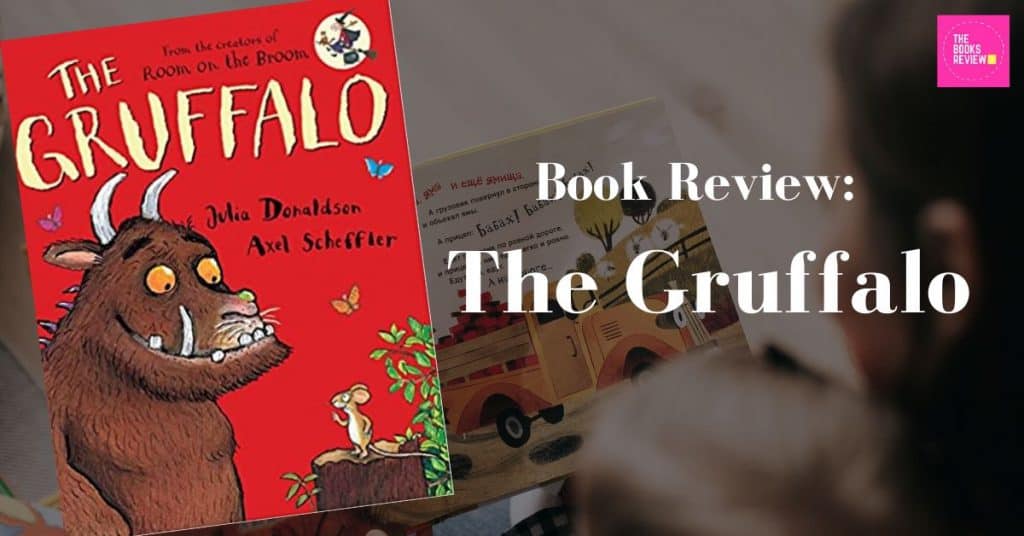
My daughter could recite The Gruffalo before she could read. The rhymes stuck in her head the way song lyrics do. “He has terrible tusks, and terrible claws, and terrible teeth in his terrible jaws.” She’d say it at dinner, in the car, to strangers at the grocery store. We read it hundreds of times and it never got old.
Julia Donaldson and Axel Scheffler created something that works on two levels. For kids, it’s a funny story about a clever mouse. For adults, it’s a masterclass in rhythm, structure, and a genuinely clever twist. Published in 1999, it’s sold over 13.5 million copies worldwide and been translated into over 70 languages.
Best for ages 3-7. The rhyming text works for younger listeners, and the story’s logic appeals to older kids who appreciate the Mouse’s strategy.
What Is The Gruffalo About?
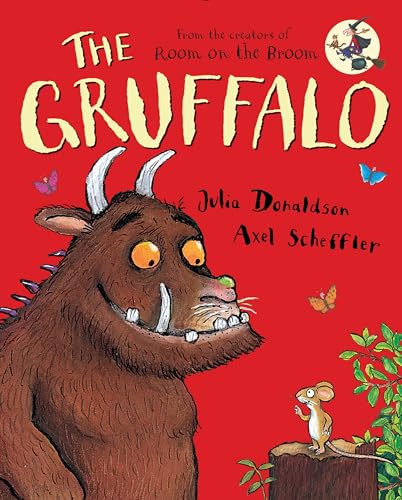
A mouse takes a walk through a deep, dark wood. A fox invites the mouse to lunch. The mouse declines. He’s meeting a Gruffalo, he says, and describes this terrifying creature in detail: terrible tusks, terrible claws, terrible teeth, a poisonous wart on the end of his nose.
The fox leaves. The mouse meets an owl, then a snake. Same setup, same result. Each predator wants to eat the mouse. Each time, the mouse invents more details about the Gruffalo to scare them off.
Then the mouse meets a real Gruffalo.
The second half of the book flips the dynamic. The mouse has to outsmart the very creature he invented. How he does it is the best part, and I won’t spoil it here. But the twist is clever enough that adults genuinely enjoy it, which is rare for a picture book aimed at preschoolers.
About the Creators
Julia Donaldson is one of the most successful children’s authors alive. She served as the UK Children’s Laureate from 2011 to 2013. Beyond The Gruffalo, she’s written Room on the Broom, Stick Man, Zog, The Snail and the Whale, and dozens more. Her background in songwriting shows in every book. The meter and rhyme schemes are tight. Nothing feels forced.
Axel Scheffler is a German-born illustrator who’s worked with Donaldson on most of her best-known books. His style is instantly recognizable: warm colors, expressive faces, and forests that feel like real places. He’s also the illustrator behind the Pip and Posy toddler series and the Flip Flap interactive board books.
Donaldson and Scheffler have collaborated on more than 20 books. The partnership is one of the most productive in children’s publishing.
Awards and Legacy
The Gruffalo won the Smarties Prize Gold Award in 1999. It’s been named one of the top children’s books of all time by multiple publications. Over 13.5 million copies sold. Translations in 70+ languages. Stage adaptations that have toured internationally.
The book spawned a sequel, The Gruffalo’s Child (2004), which follows the Gruffalo’s daughter as she ventures into the woods looking for the “Big Bad Mouse.” It’s a solid companion, though most families agree the original is stronger.
A new Gruffalo picture book by Donaldson and Scheffler is scheduled for September 2026, the first in over 20 years.
The Animation
Magic Light Pictures adapted The Gruffalo into a 27-minute animated short in 2009. It was nominated for the Academy Award for Best Animated Short Film and features James Corden as Mouse, Robbie Coltrane as The Gruffalo, Helena Bonham Carter as narrator, and John Hurt as Owl.
The animation is faithful to the book and well worth watching. Our full Gruffalo animation guide covers the voice cast, the sequel, and where to watch all 13 Julia Donaldson animations.
Similar Books
If your child loves The Gruffalo, these books scratch the same itch:
Room on the Broom by Julia Donaldson and Axel Scheffler. A witch picks up companions on her broom journey. Same rhyming structure, same quality illustrations, and another clever ending.
Stick Man by Donaldson and Scheffler follows a stick who keeps getting picked up and used for things. Funnier than it sounds. The Christmas ending is genuinely touching.
We’re Going on a Bear Hunt by Michael Rosen. Different style (no rhyme, more rhythm and repetition), but the same sense of adventure and a satisfying scare at the end.
The Very Hungry Caterpillar by Eric Carle is a different kind of classic, but if your child likes the repetitive structure of The Gruffalo, they’ll connect with the caterpillar’s progression too.
What’s Next
Watch the Oscar-nominated Gruffalo animation with your kids. Our Gruffalo books and activities guide covers activity books, games, and crafts.
For the full Julia Donaldson collection, check our Julia Donaldson books guide.
Browse more picks by age: books for 3-year-olds, books for 4-year-olds, and books for 5-year-olds.

About These Recommendations
I’m George. I read to my kids for 10+ years before they started reading on their own. My wife’s a therapist who helped pick books that actually matter for development. Everything on this site got tested on our family first.
FAQs
Ages 3-7. Younger preschoolers enjoy the rhymes and illustrations. Older kids (5-7) appreciate the Mouse’s clever strategy. The repetitive structure makes it work well as a read-aloud from age 2.
It depends on the child. The Gruffalo is described with “terrible tusks, terrible claws, and terrible teeth,” which most kids find funny rather than frightening. But sensitive children under 3 might need reassurance. Read it yourself first if your child scares easily.
Brains beat brawn. The smallest character in the forest (Mouse) outsmarts every predator, including the Gruffalo itself, through cleverness rather than strength. It’s a story about using your head when you’re at a disadvantage.
Julia Donaldson wrote the text and Axel Scheffler illustrated it. Donaldson is a former UK Children’s Laureate and one of the most successful children’s authors alive. Scheffler has illustrated over 200 books.
Yes. A 27-minute animated short was produced by Magic Light Pictures in 2009, starring James Corden, Robbie Coltrane, and Helena Bonham Carter. It was nominated for an Academy Award. A sequel, The Gruffalo’s Child, followed in 2011.
Over 13.5 million copies worldwide. The book has been translated into more than 70 languages since its publication in 1999. It won the Smarties Prize Gold Award and has been adapted into stage shows, animations, and merchandise.